
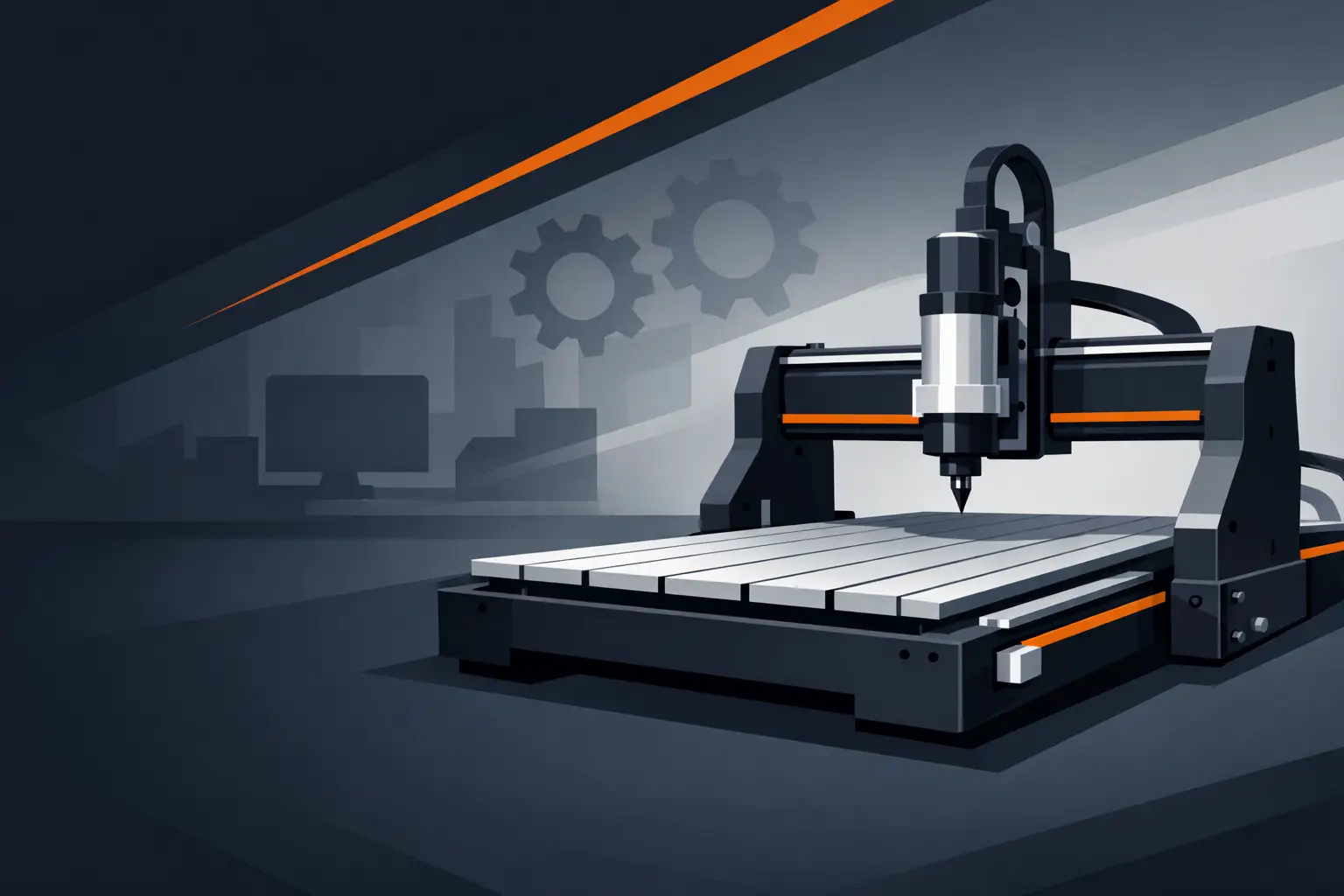
If you are pricing machines based only on table size and spindle power, a custom cnc router build can look like a luxury. In a real production shop, it usually is not. It is often the difference between a machine that fits your workflow for years and one that creates daily workarounds from the first week on the floor.
That matters whether you are cutting cabinet components, machining sign panels, surfacing composites, or running nested production. The right build is not about adding every option available. It is about specifying the frame, drive system, spindle, vacuum setup, control package, and support level around the jobs you actually run, the tolerances you need, and the output your shop depends on.
Why a custom CNC router build makes sense
Commercial buyers usually arrive at customization after seeing the limits of standard machines. A fixed-spec router may look competitive on paper, but production exposes the weak points quickly. If the frame lacks rigidity, finishes suffer. If the drive system is undersized, acceleration drops and cycle times stretch. If the vacuum zoning does not suit your sheet sizes, material holding becomes inconsistent.
A custom cnc router build solves those mismatches before the machine is installed. Instead of adapting your workflow to a generic configuration, the machine is built around your production reality. That can mean a larger work area for full-sheet handling, an automatic tool changer for mixed-job throughput, higher spindle power for heavier cuts, or upgraded electrical design for cleaner, more dependable operation.
This is where experienced buyers and first-time CNC buyers often meet in the same place. Both want the same outcome: repeatable accuracy, dependable uptime, and support that does not disappear after delivery.
Start with the workload, not the spec sheet
The most useful way to plan a router is to work backward from the jobs. Material type, sheet size, part repeatability, surface finish expectations, and daily runtime all shape the correct machine configuration. A cabinet shop processing full sheets has different priorities from a fabricator cutting aluminum composite panel, even if both need a 4×8 or larger platform.
For woodworking, the conversation usually centers on feed consistency, vacuum performance, and dust management. For sign production, edge quality and tool changes may matter more. For mixed-material work, spindle selection and motion tuning become more critical because the machine has to stay accurate across different cutting loads.
This is why table size alone is not enough. A 1325 platform may suit one shop perfectly, while another operation needs the travel, rigidity, and productivity gains of an 1836, 1860, or an ATC-equipped setup. The better question is not, “What is the biggest machine I can buy?” It is, “What machine can run my current jobs well and still support the next stage of growth?”
The frame is where performance starts
A router can only cut as well as the structure underneath it. In production environments, frame rigidity is not a marketing detail. It affects vibration control, finish quality, repeatability, and machine life.
A heavier, properly engineered frame gives the motion system a more stable base to work from. That becomes obvious when you push feed rates, machine thicker material, or run long shifts. A light frame may still move, but it is more likely to flex, resonate, and lose consistency under load. The result is a machine that looks acceptable in a showroom but struggles in steady commercial use.
For a custom build, this is one of the most valuable decisions to get right early. If your shop expects real throughput, the frame should be designed for production loads, not occasional cutting.
Motion systems, spindle choice, and where accuracy is won
Once the frame is right, the next question is how the machine moves and how it cuts. Linear guides, drive components, motor sizing, and control tuning all influence how smoothly the router accelerates, holds position, and repeats parts across a full bed.
There is always a trade-off here. A machine can be configured for raw speed, but if control quality and mechanical design are not balanced, speed does not translate into usable output. Shops do not make money from rapid travel numbers alone. They make money from finished parts that come off the table accurately, consistently, and on time.
Spindle selection follows the same logic. Higher power is useful, but only when it matches the materials, tool sizes, and duty cycle. A shop cutting dense sheet goods all day may need more spindle capacity and cooling stability than a workshop handling lighter signage materials. An automatic tool changer can be a major productivity upgrade, but only if your job mix involves frequent tool swaps or multi-step machining. If most jobs use one or two tools, the return depends on your volume.
Vacuum tables and material handling matter more than many buyers expect
A machine can have a strong frame and quality spindle and still underperform if the workholding is not suited to the application. Vacuum table design, zoning layout, pump capacity, and spoilboard strategy all affect cut stability and sheet utilization.
This is especially important in nested manufacturing. If hold-down is inconsistent, small parts shift, edge quality suffers, and scrap increases. The machine may not be the problem at all. The issue may be that the vacuum system was never matched to the way the shop processes material.
A custom cnc router build often earns its value here. The right vacuum configuration can improve part security, reduce setup time, and support more reliable unattended cutting. For many businesses, that has a bigger day-to-day impact than chasing another small increase in spindle power.
Electrical design and controls are not the place to cut corners
A lot of machine comparisons focus on visible hardware and ignore the electrical side. In practice, clean electrical engineering, quality components, and well-integrated controls are central to uptime. They affect reliability, troubleshooting speed, operator confidence, and serviceability over the long term.
This is one area where low-cost commodity machines often create expensive downtime. Messy cabinet layouts, poor component access, inconsistent wiring standards, and weak documentation all make support slower and faults harder to resolve. In a production environment, that delay costs more than the original savings.
For buyers who rely on the machine daily, dependable control architecture matters. So does access to technical support from people who understand the machine build, not just the sales brochure.
Support should be part of the build decision
A router is not just delivered and forgotten. It needs installation planning, operator familiarity, maintenance guidance, and responsive support when questions come up. That is true for experienced CNC users as well as businesses buying their first production router.
This is why machine customization and after-sales support should be considered together. A supplier that can tailor the build, explain the reasons behind the configuration, and provide ongoing technical help gives the buyer a much stronger position than a seller focused only on shipment.
For workshops in active manufacturing regions such as Melbourne, Brisbane, and Sydney industrial corridors, practical support and installation experience often matter just as much as the machine spec. A well-built router backed by responsive service is easier to integrate, easier to keep productive, and easier to trust as workloads increase.
What to ask before approving a custom CNC router build
The right questions are usually operational, not promotional. Ask how the machine is configured for your material types, your daily runtime, and your likely growth. Ask what changes if you move from occasional cutting to full-shift production. Ask how the vacuum system, spindle package, and tool changing options affect throughput in your specific environment.
It is also worth asking what happens after installation. How is support handled? How are faults diagnosed? What guidance is available for setup, maintenance, and operator onboarding? Companies like MadBytes stand out when the conversation stays grounded in workshop performance rather than generic sales claims.
A serious machine purchase should leave you with a clear understanding of why the build is specified the way it is. If that explanation is vague, the customization may be cosmetic rather than practical.
The best custom build is rarely the one with the longest option list. It is the one that fits the work, holds accuracy under load, and keeps producing when your schedule is tight and downtime is expensive. Buy for the job in front of you, but leave enough headroom for the work you want next.