
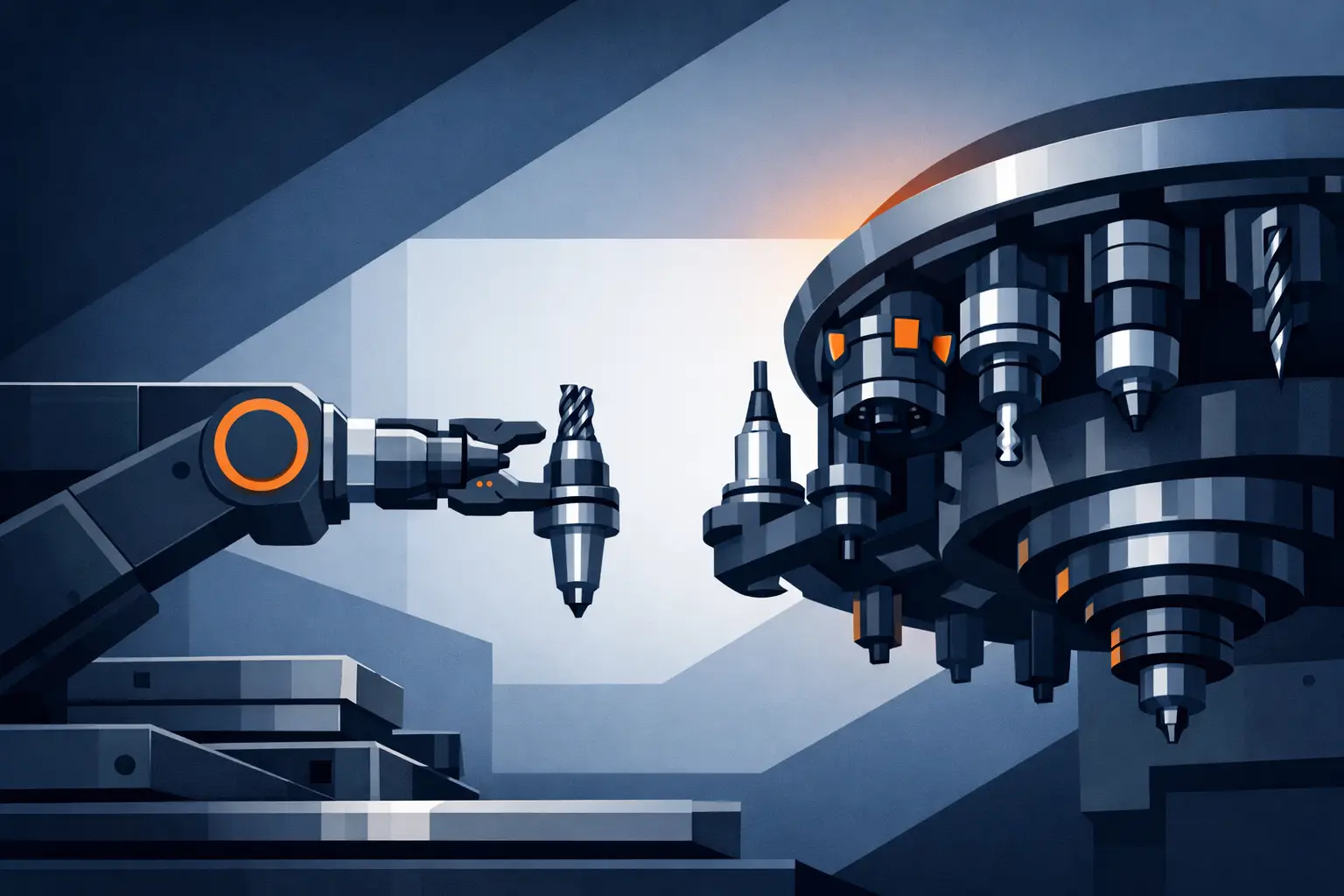
A shop usually feels the limits of a manual tool change before it sees them on paper. Jobs stack up, setup time stretches, and operators spend too much of the day stopping the machine instead of keeping parts moving. That is where an automatic tool changer guide becomes useful – not as a feature checklist, but as a practical way to decide whether ATC is the right move for your production work.
For cabinetmakers, sign shops, fabricators, and general manufacturers, an automatic tool changer is not just about convenience. It changes how a CNC router fits into the workflow. If you are cutting nested sheets, drilling, pocketing, surfacing, and finishing in one cycle, the value is straightforward. The machine spends more time machining and less time waiting for operator input.
What an automatic tool changer actually does
An automatic tool changer, often shortened to ATC, allows the machine spindle to switch between preloaded tools without manual intervention. Instead of stopping the job to fit a different bit or cutter, the machine moves to the tool rack or carousel, returns the current tool, and picks up the next one called for by the program.
That sounds simple, but the business impact is significant. On multi-operation jobs, even short pauses add up fast across a day, a week, and a year. More importantly, ATC reduces variation caused by repeated manual intervention. The less often an operator has to stop the process, the more consistent the cycle tends to be.
In a production environment, that consistency matters as much as raw speed. Shops rarely lose margin because one cut was a few seconds slower. They lose margin when setup drifts, jobs take too many touchpoints, or throughput depends too heavily on one skilled operator being available at the right moment.
Automatic tool changer guide: who really needs one?
Not every shop needs ATC on day one. If you mainly run simple profiles with one or two tools, or your machine is dedicated to a narrow task, a manual change setup may still make financial sense. The right answer depends on job mix, labor costs, shift structure, and how often the machine switches operations.
ATC becomes much easier to justify when your work includes cabinets, furniture components, custom joinery, acoustic panels, sign production, composite cutting, or nested manufacturing with multiple tools per sheet. These jobs reward automation because they combine different cutter types and repeated tool changes in the same cycle.
Shops scaling from owner-operator work into repeat production are often the best fit. At that stage, the machine is no longer just a tool. It becomes part of a broader process that includes quoting, scheduling, material handling, and delivery deadlines. An ATC router helps stabilize output because fewer steps depend on stopping and restarting by hand.
Where ATC saves time in the real world
The obvious gain is reduced downtime between tools, but that is only part of it. The bigger gain is process compression. A machine with ATC can run surfacing, roughing, finishing, drilling, and engraving in one programmed sequence. That means fewer interruptions, fewer chances for setup error, and better use of operator time.
For example, a cabinet shop might use one tool for sheet sizing, another for dadoes, a third for drilling, and a compression bit for finish cuts. On a manual machine, each change breaks the workflow. On an ATC machine, those changes happen as part of the cycle. The operator can focus on loading material, checking output, and preparing the next run.
This matters even more when labor is tight. A good machine should reduce pressure on skilled staff, not add to it. ATC helps by making the process less dependent on constant operator presence, especially on repeat jobs where consistency is the priority.
Tool rack, spindle, and machine build all matter
Buyers sometimes focus on the number of tool positions first. That is understandable, but capacity alone does not tell you how well the system will perform. A 6-tool machine with solid engineering can be more productive than a poorly integrated 12-tool setup.
The spindle matters because tool holding accuracy, clamping reliability, and repeatability all affect cut quality. The machine frame matters because an ATC router is often expected to handle heavier, more complex production work. If the chassis lacks rigidity or the motion system is not precise, the benefit of automatic tool changes gets diluted by vibration, inaccuracy, or inconsistent finishes.
Electrical design matters too. Tool change routines rely on sensors, pneumatics, spindle control, and software coordination working together every time. In a showroom, most machines look capable. In a workshop running full days under production load, cleaner engineering and dependable support make the difference.
What to check before buying an ATC CNC router
The best buying decisions usually come from matching machine capability to actual production needs, not future wish lists. Start with your part mix. How many tools do your common jobs really use? How often do you rerun those jobs? Are you trying to increase output, reduce labor touchpoints, improve finish quality, or all three?
Then look closely at the machine as a system. Ask how tool length is managed, how tool positions are configured, how repeatable the spindle interface is, and how easy the rack is to access for maintenance. Consider whether the controller and software are straightforward for your operators, especially if your team is growing.
Support should be part of the purchasing decision, not an afterthought. ATC machines are more capable, but they are also more integrated. If there is a setup issue, calibration question, or service need, fast technical response protects uptime. That is one reason many production shops prefer working with suppliers that understand workshop conditions rather than simply moving inventory.
The trade-offs buyers should understand
ATC is not a free upgrade in every scenario. The machine costs more, setup can be more involved, and the benefits show up most clearly when the workload actually uses multiple tools and repeated cycles. If your jobs are short, simple, and irregular, the payback may be slower than expected.
There is also a maintenance reality. More automation means more components to inspect and keep in order. That does not make ATC a poor choice. It simply means the machine should be selected with realistic expectations about service access, operator training, and long-term ownership.
The strongest case for ATC is not that it makes every shop faster. It is that it makes the right type of shop more consistent, more efficient, and less exposed to avoidable downtime. For many businesses, that is the bigger win.
Automatic tool changer guide for growing workshops
If your shop is moving from occasional CNC use into daily production, ATC often marks the point where the machine starts acting like a real production asset. Instead of planning jobs around machine interruptions, you begin planning jobs around continuous cycles and repeatable output.
That shift is especially valuable for businesses quoting more complex work or trying to shorten lead times without adding labor at the same pace. In those cases, a well-built ATC router does more than save minutes. It gives the operation more control over scheduling and capacity.
For workshops across manufacturing hubs like Melbourne, Brisbane, and Sydney industrial corridors, that can be a practical advantage. Delivery windows are tighter, custom jobs are common, and machine downtime has a direct cost. A reliable ATC setup supports production discipline in a way a basic machine often cannot.
Choosing the right machine, not just the right feature
An ATC label on a spec sheet is not enough. You want a machine built for the workload, with a rigid frame, accurate motion control, stable spindle performance, and support that continues after installation. Whether you are comparing bed sizes, spindle options, or tool rack layouts, the question is the same: will this machine hold up under the type of production you actually run?
That is why experienced buyers look beyond headline specs. They ask how the machine behaves over long runs, how easy it is to service, and whether the supplier can help when production pressure is high. MadBytes takes that workshop-first approach because equipment has to perform where it counts – on the floor, under load, with deadlines in play.
A good ATC machine should feel like it removes friction from the business. It should reduce interruptions, improve consistency, and support the way your team works now while giving you room to grow. If your jobs already involve repeated tool changes, the real question is often not whether ATC is worthwhile. It is whether you can keep scaling efficiently without it.
The right machine should earn its place every day, and an ATC router does that best when it is chosen to match the work, the pace, and the expectations of a serious production shop.