
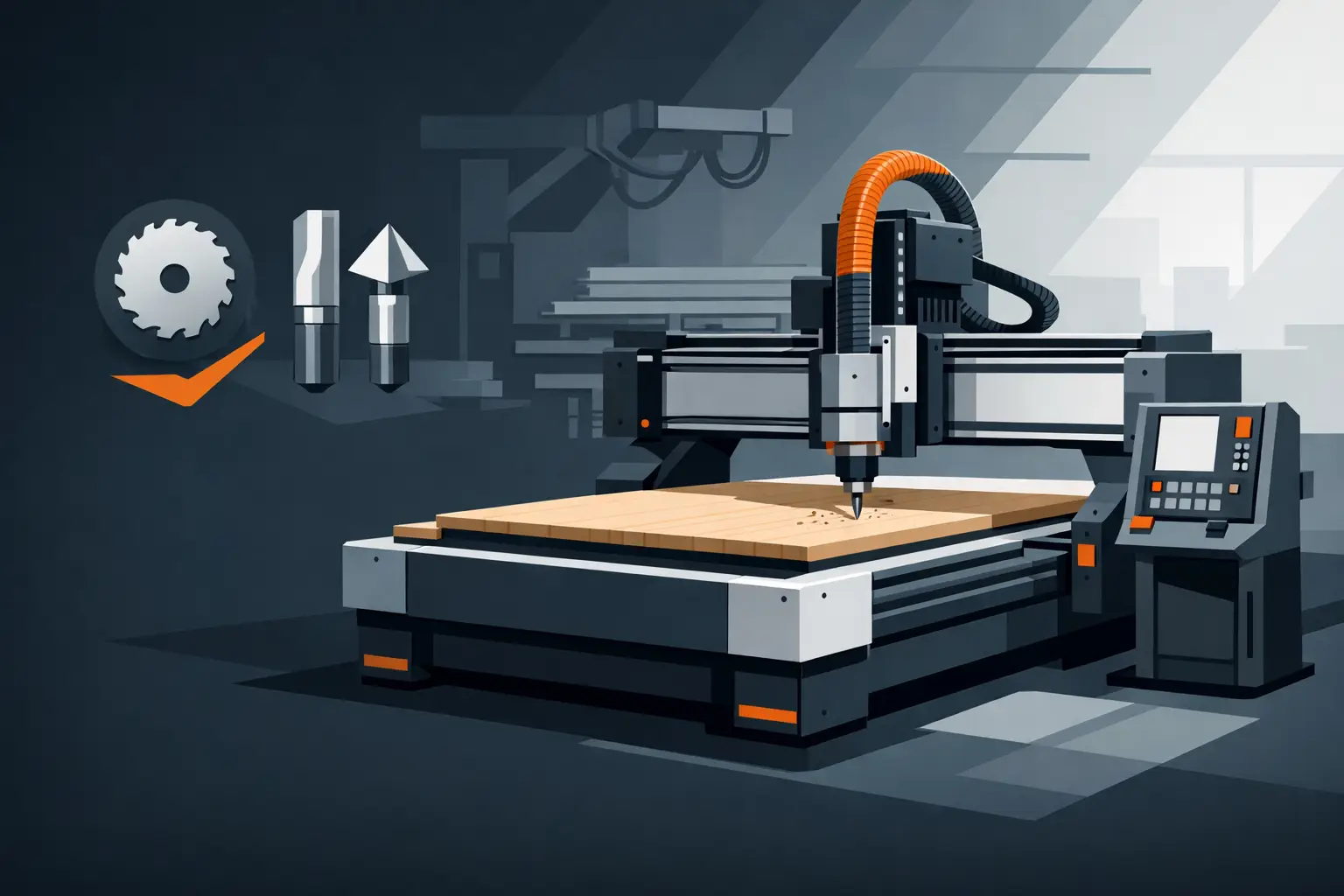
If your shop is still relying on manual setups, repeat measuring, and too much operator intervention, a woodworking production CNC router changes more than just cut speed. It changes consistency, scheduling, labor use, and how confidently you can take on repeat work. For cabinet shops, sign makers, and production workshops, the right machine is not just a tool – it becomes part of your daily output strategy.
The problem is that many buyers compare routers by headline specs alone. Table size, spindle power, and advertised speed matter, but they do not tell you how the machine behaves after months of production. What matters in a real workshop is whether the machine holds accuracy over long runs, handles sheet loading efficiently, and keeps downtime under control when jobs are stacked back to back.
What a woodworking production CNC router should deliver
A true production machine is built for repeatability first. That means stable cutting across full sheets, dependable edge quality, and predictable part-to-part consistency. In woodworking, small deviations become expensive quickly. Poor accuracy can create fitment issues in cabinetry, waste premium board, and slow assembly because parts need rework.
Rigid frame construction is one of the first things to look at. A heavier, properly engineered frame helps reduce vibration, especially when cutting nested panels, hardwood components, or thicker materials at sustained feed rates. The result is cleaner finish quality and better dimensional control. Shops often focus on spindle power, but frame rigidity and motion quality have just as much impact on production results.
The motion system also deserves close attention. Linear guides, drive components, and machine calibration affect whether the router can maintain smooth movement under load. A machine that looks good on paper can still produce chatter, positional error, or inconsistent finish if the motion package is not matched to production work. That is why engineering quality matters more than feature count.
Matching the machine to your workflow
The best woodworking production CNC router is the one that fits your actual workload, not the one with the longest option list. A cabinetmaker processing full sheets every day has different priorities than a custom furniture shop producing smaller batches. The workload determines the right bed size, spindle setup, and automation level.
For sheet-based production, common platform sizes such as 1325, 1825, 1828, 1836, 1360, and 1860 can make a significant difference in output. A shop running nested-based manufacturing needs enough table capacity to process standard sheet stock efficiently without creating extra handling steps. If your jobs regularly exceed standard dimensions, a larger format machine may improve throughput simply by reducing repositioning and secondary setups.
Spindle choice depends on the material mix and the type of parts you are producing. If your work is mostly panel cutting, drilling, and routing common board materials, a well-matched spindle and tool package may be enough. If your workload includes varied tooling, multiple operations, and frequent job changeovers, an automatic tool changer starts to make more sense. ATC-equipped machines reduce manual intervention and help keep cycle times more consistent, especially when one job requires several tools.
When automation starts paying for itself
Automation is not about buying the most complex machine available. It is about removing the delays that quietly reduce output across the week. Tool changes, vacuum hold-down performance, material loading, and job setup all affect how much production time you actually get from each shift.
An ATC router is often the right move for shops that are moving from occasional CNC work into dedicated production. Instead of stopping to change tools manually, the machine can transition through operations with less interruption. That is especially useful in cabinetry, signage, and component manufacturing where repeat jobs need reliable cycle times.
Vacuum performance is another area buyers sometimes underestimate. In production woodworking, poor hold-down creates movement, poor edge quality, and wasted material. A strong, properly configured vacuum system supports cleaner cutting and more reliable part retention, especially when processing nested panels or smaller components.
Speed matters, but control matters more
High feed rates look attractive in a brochure, but speed without control creates scrap faster. A production router should cut efficiently while still maintaining finish quality and positional accuracy. That balance comes from the overall machine build – frame stiffness, spindle stability, drive system quality, and clean electrical engineering.
Electrical design rarely gets enough attention during the buying process. Yet in a production environment, wiring quality, component layout, and controller reliability have a direct effect on uptime. Electrical faults are not just frustrating. They stop jobs, delay delivery, and pull staff away from productive work. A well-built control system is part of machine reliability, not a secondary detail.
This is also where after-sales support becomes a practical buying factor rather than a marketing claim. Even a strong machine needs setup assistance, maintenance guidance, and occasional troubleshooting. When support is direct, responsive, and technical, issues get resolved faster and production gets back on track. That matters far more than a low upfront price when the machine is central to your workflow.
Buying for today versus buying for growth
Many workshops start by trying to match the machine to current demand only. That can be a mistake if business growth is already pushing lead times, staffing, or floor space. A router that suits the shop today may become a bottleneck much sooner than expected.
A better approach is to assess where your production pressure actually sits. If setup times are slowing throughput, a machine with an automatic tool changer may offer more value than simply moving to a bigger spindle. If material handling is the issue, a larger bed or better vacuum zoning may have a greater effect on output. If finish quality is inconsistent, the answer may be frame design and motion accuracy rather than more horsepower.
Shops that plan well usually buy with both present workload and near-term growth in mind. That does not mean overbuying. It means choosing a platform with enough capacity, durability, and configuration flexibility to remain productive as the operation expands.
Customization is often the difference
Production workshops are rarely identical. One shop may need a router optimized for nested cabinet parts, while another may need a machine suited to signage, hardwood machining, or a mix of custom work and repeat batches. That is why custom machine configuration can be valuable.
Table size, spindle options, ATC configuration, vacuum layout, and other build details should support the way the shop actually runs. A standard machine can work well in many environments, but a tailored configuration usually delivers better efficiency over time because it reduces compromises from day one.
This is where dealing with an engineering-led supplier has a clear advantage. The conversation shifts from selling a generic model to building a machine around output, materials, and production targets. For serious buyers, that is a better path than trying to force a low-cost machine into a workload it was never designed to handle.
What experienced buyers usually ask first
Experienced machine buyers tend to ask fewer questions about headline speed and more questions about reliability under load. They want to know whether the machine will hold tolerance over long runs, whether the frame is built for sustained work, and how quickly technical support responds when production is on the line.
Newer buyers often focus on features, which is understandable, but long-term ownership comes back to fundamentals. Can the machine produce consistent parts every day? Is the control system dependable? Is installation support available? Can operators get practical guidance without chasing answers for days?
Those questions are especially relevant for shops scaling into CNC-based production for the first time. A good supplier does more than deliver a machine. They help shorten the learning curve, support installation, and remain available after the sale. Companies such as MadBytes build their reputation on that workshop-first approach because reliable support is part of machine performance.
The real cost of choosing the wrong router
The wrong machine does not always fail dramatically. Sometimes it just underperforms in ways that drain profit slowly. It may require extra finishing, lose accuracy over larger sheets, create more setup time than expected, or struggle with repeat workloads. On paper, the purchase price looked competitive. On the floor, the output never quite matches the need.
That is why selecting a woodworking production CNC router should be treated as an operational decision, not just a purchasing exercise. The right machine supports better scheduling, cleaner parts, less waste, and more reliable delivery times. It gives the workshop room to grow without constantly working around equipment limitations.
If you are comparing machines now, look past the sales sheet and think about what your production day actually demands. The best router is the one that keeps cutting accurately when the workload is real, the deadlines are tight, and the shop needs dependable output every shift.