
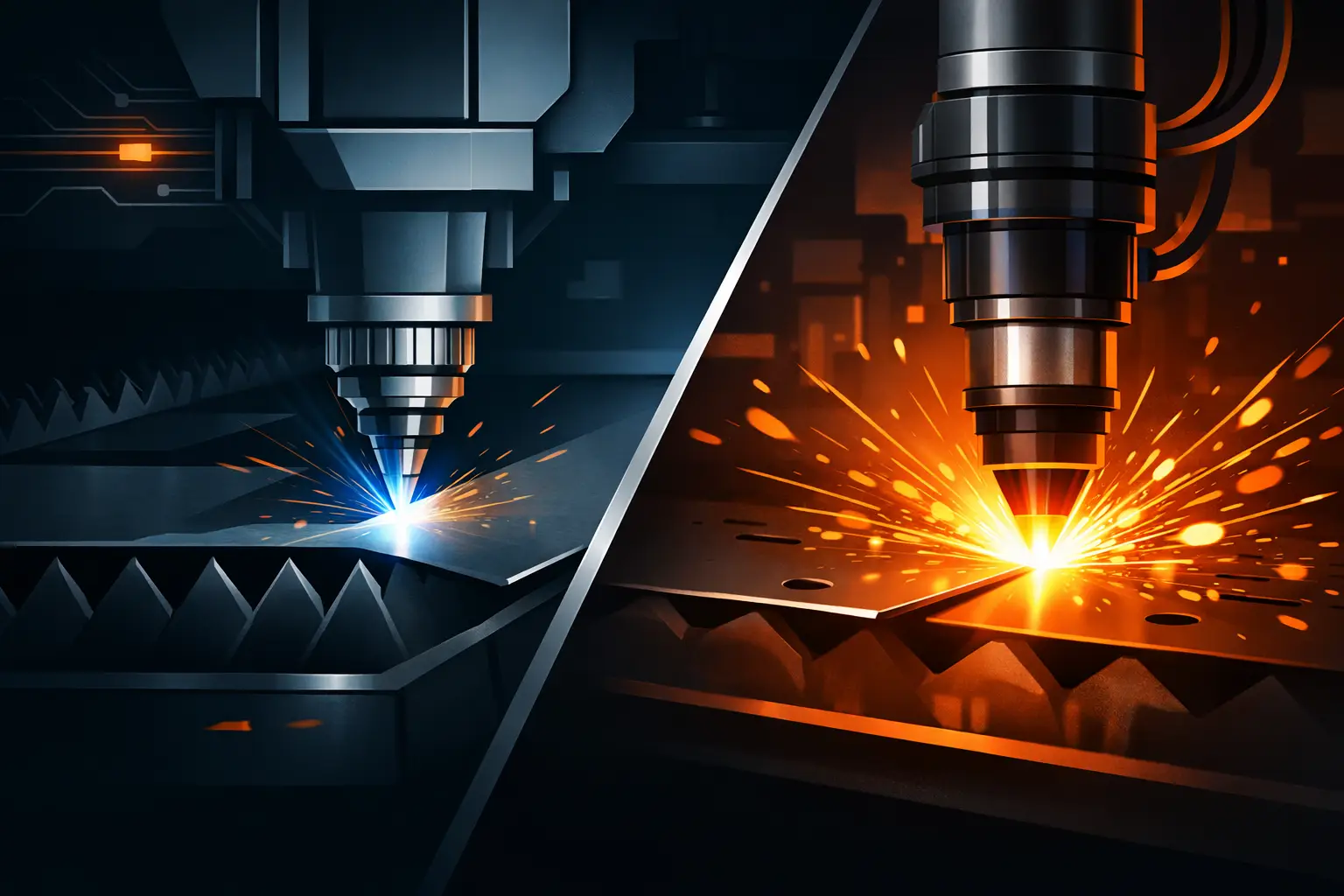
When a shop starts comparing fiber laser vs plasma, the real question usually is not which technology sounds better on paper. It is which machine will keep production moving, hit your tolerance targets, and make sense for the mix of jobs coming through the door every week.
That decision matters because these two systems solve different production problems. Both cut metal. Both can be profitable. But they behave very differently once you look at edge quality, operating cost, thickness range, floor space, maintenance demands, and the kind of work your customers actually pay you for.
Fiber laser vs plasma at a glance
If your work leans toward precision sheet metal, repeatable small parts, clean edges, and less secondary finishing, a fiber laser usually has the advantage. It is built for accuracy, fast processing on thin to medium materials, and a cleaner finished result.
If your business cuts thicker plate, handles rougher fabrication work, or needs a lower entry cost, plasma can still be a practical production tool. It is widely used because it is capable, familiar, and often more affordable upfront.
The mistake is assuming one technology replaces the other in every shop. In practice, the better choice depends on what you cut, how often you cut it, and what level of finish your customers expect.
Cut quality is where the gap becomes obvious
For many buyers, cut quality is the first real separator. Fiber laser systems produce a much narrower kerf, a smaller heat-affected zone, and a more refined edge on thin and medium gauge metal. That translates into cleaner parts, sharper detail, and better consistency when jobs require tight tolerances.
This matters if you are cutting brackets, enclosures, signage components, decorative panels, or production parts that need to move straight into bending, welding, or assembly. Less dross and less cleanup save real time. So does better hole quality, especially on smaller features where plasma starts to show its limits.
Plasma cutting is more aggressive by nature. It is effective and productive, but the edge is generally rougher and the heat impact is greater. On thicker material, that trade-off may be acceptable. On finer work, it often creates extra labor after the cut. If your team is regularly grinding edges, reworking holes, or correcting inconsistencies before the next process, that labor cost belongs in the buying decision.
When edge finish affects profitability
A shop does not earn margin from avoidable cleanup. If customers expect ready-to-process parts, fiber laser can remove friction from the workflow. If customers are buying structural or heavier fabrication components where cosmetic finish is less critical, plasma may still fit well.
That is why machine selection should always be tied to the output standard your shop sells, not just the fact that both systems can cut metal.
Speed depends on thickness, not just machine type
There is no honest single answer to which is faster. It depends on the material thickness and the work mix.
Fiber laser systems are typically very fast on thin sheet and light to medium plate. If your shop processes stainless, mild steel, aluminum, or brass in thinner gauges, laser performance can be hard to beat. Fast piercing, rapid acceleration, and high positional accuracy also help on nested sheets with many small contours.
Plasma remains competitive, and sometimes preferred, on thicker materials. If you are regularly cutting heavier plate for general fabrication, structural work, or repair jobs, plasma can deliver strong throughput without the higher investment associated with a fiber laser system sized for that workload.
This is where many buyers need to be realistic. Shops often focus on peak speed numbers, but daily production is shaped by the full cycle – loading, cutting, unload time, cleanup, and whether parts are acceptable immediately after processing. A machine that cuts fast but creates more downstream work may not be the faster system in real production.
Material thickness changes the buying decision
Thickness is one of the most important decision points in any fiber laser vs plasma comparison.
Fiber lasers are outstanding on thin sheet and remain very effective through common production ranges used in fabrication and manufacturing. They are especially strong where precision matters and where part geometry includes fine details, tight corners, or smaller holes.
Plasma has long been favored for thicker plate work. It is a practical option when edge appearance is less critical and the priority is getting through heavier material efficiently. For fabrication shops that build larger steel components, support structures, or heavy-duty parts, this can make plasma a sensible fit.
The key is not to buy for the occasional job that appears once a month. Buy for the work that fills most of your schedule. If 80 percent of your jobs are thin to medium sheet with repeatable precision requirements, fiber laser is usually the stronger long-term investment. If your core business is heavier plate and general fab work, plasma may align better with your workload.
Upfront cost versus running cost
Plasma often wins the conversation on initial purchase price. For shops entering CNC cutting for the first time, that lower barrier can be attractive. It may allow a business to bring cutting in-house, reduce outsourcing, and expand capability without making a larger capital jump.
But upfront price is only part of the picture. Fiber laser systems can offer lower operating costs in the right production environment, especially where cut quality reduces rework and where productivity on thinner material drives more throughput. Consumables, power usage, maintenance intervals, and scrap reduction all influence the real cost per part.
Plasma systems also rely on consumables that wear over time, and cut quality can shift as those components degrade. That does not make plasma a poor choice. It simply means cost should be measured over years of production, not just at the point of sale.
The hidden cost of secondary processing
One of the most overlooked expenses in metal cutting is manual finishing. If operators spend significant time deburring, grinding, or correcting parts after plasma cutting, the machine may be cheaper to buy but more expensive to run. Shops that value labor efficiency usually see this clearly once volume increases.
Maintenance and reliability in daily shop use
Every machine needs support, setup, and preventive maintenance. The difference is how that maintenance affects uptime and output.
Fiber laser systems are precision machines. They demand solid engineering, stable motion systems, clean electrical integration, and proper installation. When those fundamentals are right, they can deliver excellent consistency and dependable production performance. For buyers, this is why machine build quality and supplier support matter as much as the technology itself.
Plasma systems are also proven in industrial environments, but they bring their own maintenance pattern with torch components and consumables that need regular attention. In some shops, that is entirely manageable. In others, especially where precision standards are rising, it becomes a recurring production variable.
A reliable supplier should help you look beyond spec sheets. Frame rigidity, drive quality, extraction setup, control system stability, and technical backup all affect whether the machine performs well after installation, not just during the sales process.
Which shops usually benefit most from fiber laser?
Fiber laser is often the better fit for sheet metal shops, sign makers, manufacturers, and fabrication businesses that need precision and repeatability. If your parts move into forming, welding, powder coating, or final assembly, cleaner cuts can improve the entire workflow.
It also suits businesses that quote jobs where part appearance matters. Customers may not always ask what machine cut the part, but they notice clean edges, accurate holes, and consistent fit-up.
For growing production environments, fiber laser can also support a more scalable process. Better nesting efficiency, less manual cleanup, and stronger repeatability make it easier to maintain output as order volume increases.
When plasma still makes sense
Plasma is still a strong option for many fabrication shops. If you cut thicker plate, handle repair work, or build structural components where finish is secondary to function, plasma can be productive and cost-effective.
It can also be the right starting point for businesses moving away from manual cutting methods and into CNC production. The technology is established, capable, and familiar across a wide range of industrial users.
What matters is matching the machine to the business model. Plasma is not outdated. It is simply better suited to some workloads than others.
The best choice comes down to your job mix
The most practical way to decide between fiber laser and plasma is to review your actual quoting history. Look at your common materials, average thickness, tolerance requirements, finishing time, and how often rework affects delivery.
That usually brings the answer into focus quickly. If precision, cleaner edges, and production efficiency on sheet metal drive your revenue, fiber laser is often the better strategic move. If thicker material and lower upfront investment matter more, plasma may be the smarter fit.
For many buyers, the right machine is the one that reduces friction in the shop every day. Not the one with the most appealing brochure line, but the one that fits your workload, your standards, and the support you will need once production starts. If you choose with that mindset, the machine will do more than cut metal – it will strengthen the way your shop runs.