
A fiber laser that starts every shift cleanly, holds cut quality, and stays consistent under load is rarely doing that by accident. If you want to know how to maintain fiber laser equipment properly, the answer is not complicated, but it does require discipline. Most performance problems do not begin with a major component failure. They begin with missed cleaning, unstable consumable condition, poor housekeeping, or small warning signs that were ignored because production had to keep moving.
For fabrication shops, maintenance is not a side task. It is part of output control. A fiber laser can only deliver the speed, edge quality, and repeatability it was built for when the optics path, assist gas delivery, motion system, extraction, and cooling support are all kept in good order. The goal is simple – protect cut quality, reduce unplanned downtime, and avoid turning small service items into expensive stoppages.
How to maintain fiber laser performance day to day
The best maintenance plans are simple enough to follow every day and strict enough to catch problems early. Daily checks matter because fiber lasers operate fast, and fast machines can hide gradual decline until scrap rates climb or piercing becomes inconsistent.
Start with the cutting area itself. If the bed is carrying excess slag, offcuts, or fine dust, that buildup eventually affects material support, extraction efficiency, and overall cleanliness around the head. A dirty machine zone also makes it harder to spot early issues such as nozzle damage, unstable sparks, or poor gas flow behavior. Clean around the work area at the end of the shift, not after a problem appears.
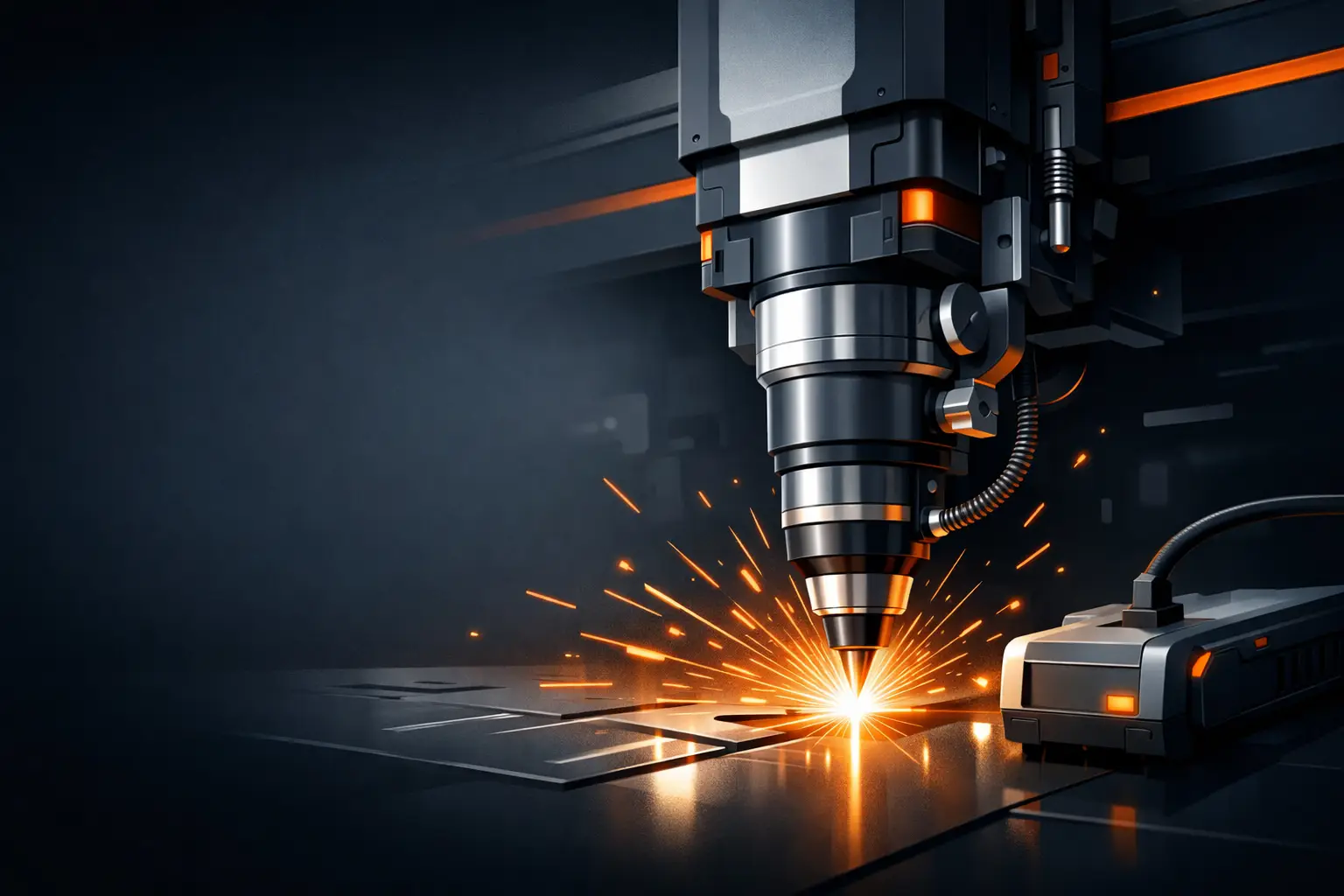
The cutting head deserves close attention because it is where small issues quickly become production issues. Check nozzle condition regularly. A nozzle with minor impact damage, contamination, or misalignment may still cut, but usually not well. You will see the result in rougher edges, more dross, inconsistent piercing, or reduced speed tolerance. Replacing a worn nozzle is a low-cost decision compared with reworking a batch of parts.
Lens protection is another area where good habits pay off. Protective windows and related consumable elements should be inspected on a schedule that matches your material mix and production volume. Shops cutting cleaner material under controlled conditions may get longer life. Shops processing material with scale, oil, or more reflected debris will need more frequent checks. The trade-off is straightforward – push consumables too long and you save a little on parts while risking far more in cut instability.
Cooling, gas, and cleanliness are not optional
A fiber laser may be sold on speed and precision, but long-term reliability often comes down to support systems. Cooling performance, air quality, and assist gas condition have a direct effect on machine stability.
Your chiller should be treated like a core production component, not an accessory. Monitor coolant condition, temperature stability, and any alarms or abnormal cycling behavior. If cooling efficiency drifts, the laser source and associated components may still run for a while, but you are increasing stress on the system. Keep heat exchangers, filters, and airflow paths clean, and follow the machine manufacturer’s service intervals for coolant inspection and replacement.
Assist gas supply is just as important. Poor gas quality, unstable pressure, or contamination in the line can show up as cut quality problems long before an operator thinks to blame the gas system. If nitrogen or oxygen delivery is inconsistent, your edge finish, piercing performance, and throughput can all suffer. Regularly inspect hoses, fittings, regulators, and filtration points. It is worth confirming that a cut issue is truly a machine issue before adjusting parameters that were not the root cause.
General cleanliness around the electrical cabinet, extraction path, and machine frame should also be part of routine care. Dust and debris do not stay politely in one place. Over time, contamination works its way into areas that affect thermal performance and electrical reliability. Good housekeeping is one of the lowest-cost ways to protect a high-value machine.
Preventive maintenance beats reactive repair
Shops often understand maintenance in theory but still fall into reactive habits in practice. The reason is simple – production pressure. If the machine is still cutting, it can be tempting to keep running. The problem is that fiber laser faults rarely schedule themselves at convenient times.
A preventive approach means assigning intervals for inspection, cleaning, calibration checks, and consumable replacement before quality drops. This includes checking nozzle centering, monitoring sensor condition, inspecting cables and line routing, verifying lubrication points where applicable, and confirming that motion components are moving smoothly without unusual noise or vibration.
This is also where recordkeeping becomes valuable. You do not need a complicated system. A clear maintenance log with dates, observations, replaced items, and recurring symptoms is enough to spot patterns. If one machine starts consuming nozzles faster than expected, or cut quality on a certain thickness begins drifting every few weeks, the log helps identify whether the issue points to materials, setup, operator practice, or a developing hardware problem.
How to maintain fiber laser cut quality over time
Cut quality is often the first thing customers notice and the first thing operators accept as normal when it declines gradually. That is why maintaining output standards needs to be part of the service mindset.
Watch for subtle changes. If edges are getting rougher, piercing is taking longer, corners are heating differently, or dross is increasing on jobs that previously ran clean, do not assume the settings just need more adjustment. Parameter changes can help in some cases, but they can also mask maintenance issues. A contaminated protective window, a worn nozzle, poor gas flow, unstable focus behavior, or weak extraction can all look like programming problems at first.
Material condition matters too. Shops that process mixed batches know this well. Oily sheet, rust, mill scale, or inconsistent flatness can affect results even on a well-maintained machine. That does not reduce the importance of maintenance – it increases it. A machine in strong service condition handles normal variation better and gives operators a more reliable baseline when troubleshooting cut quality.
If your shop depends on repeat production, set a standard for what acceptable edges, pierce marks, and backside finish should look like across common materials and thicknesses. That gives your team a reference point before problems turn into reject piles.
Operator habits make a real difference
Even the best-built machine will not stay in top condition without consistent operator care. Maintenance is not only a technician’s responsibility. Operators are the first line of protection because they see the machine every day, hear the changes, and notice when a cut no longer looks right.
The practical shops are usually the ones that train operators to report symptoms early and perform basic checks consistently. That includes cleaning routines, nozzle inspection, monitoring alarms, checking consumable condition, and paying attention to unusual sounds or changes in motion. It also means avoiding rushed workarounds that keep the machine running at the expense of long-term reliability.
There is an important balance here. You want operators engaged enough to spot issues, but not improvising beyond approved procedures. Complex service work should stay with qualified support personnel. Good maintenance culture is not about guessing. It is about catching early signs and escalating them before they become expensive.
Support matters when the machine is under real workload
A fiber laser used in a busy fabrication environment is not being judged by how it performed on day one. It is judged by how well it holds accuracy, speed, and reliability after months of real production. That is where service support, machine design quality, and practical maintenance guidance all come together.
A well-engineered machine with rigid construction, clean electrical layout, and dependable support access is easier to maintain and easier to return to peak performance when issues appear. That matters for growing shops and established manufacturers alike. It is one reason many buyers look beyond headline specs and focus on whether the supplier can actually help when service questions come up. MadBytes takes that workshop-first view because uptime is not a marketing phrase. It is what keeps jobs moving and customers happy.
If you are building your maintenance routine now, keep it practical. Clean the machine consistently, inspect consumables before they fail in production, protect the cooling and gas systems, track recurring issues, and treat small quality changes as early warnings rather than normal wear. A fiber laser rewards that discipline with better parts, fewer interruptions, and more predictable output when the schedule is full.