
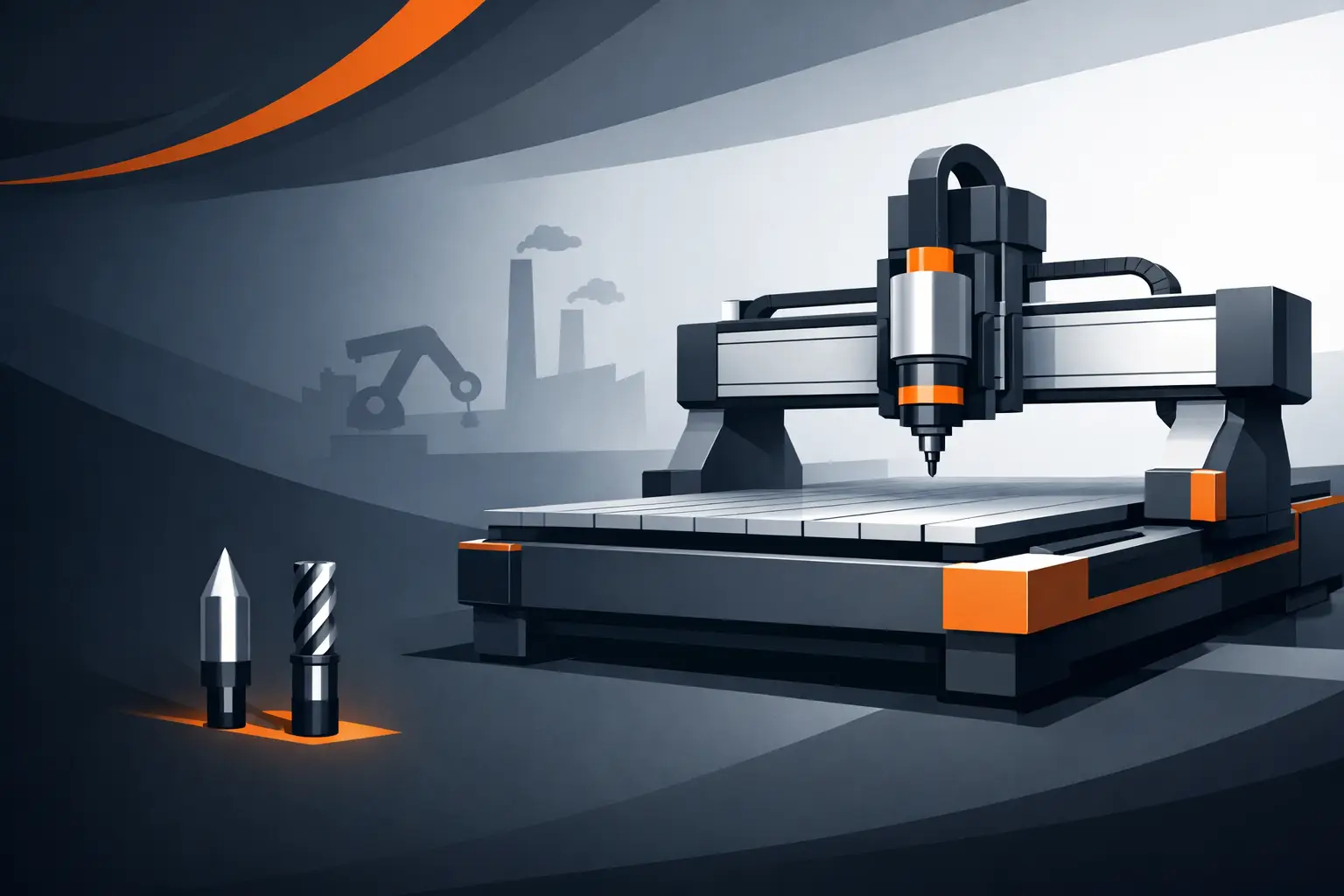
When a router goes down in a production shop, the cost is not just repair time. It is missed installs, delayed cabinet jobs, backed-up sheet stock, and operators standing still. That is why an industrial CNC router should be judged by what it delivers on a real production floor – accuracy over long runs, repeatability across shifts, and dependable support when something needs attention.
For many buyers, the challenge is not deciding whether CNC makes sense. It is figuring out which machine is built for daily commercial work and which one only looks good in a brochure. Frame strength, motion quality, spindle configuration, electrical layout, software compatibility, and service response all matter. If the router is expected to cut all day, every day, small differences in build quality become very obvious very quickly.
What makes an industrial CNC router truly industrial?
The word industrial gets used loosely, but in a workshop environment it has a straightforward meaning. The machine has to hold tolerance under load, maintain stability at production speeds, and keep doing that over time. A light-duty frame may still cut parts, but once feed rates increase and workloads become consistent, vibration, flex, and inconsistent finishes start to show up in the output.
A true industrial CNC router starts with a rigid machine structure. Heavy frames, well-supported gantries, quality linear motion components, and properly matched drive systems all contribute to better cut quality and better repeatability. Electrical engineering matters just as much. Clean control systems, properly integrated wiring, reliable components, and sensible cabinet layouts reduce faults and make service easier when it is needed.
That is also where the buying decision becomes more practical. Shops do not purchase a machine for one perfect demo cut. They purchase it for the fifth hour of the day, the sixth day of the week, and the months that follow installation.
Choosing an industrial CNC router for your workload
The right machine depends on what you cut, how often you cut it, and how much throughput you need. A cabinetmaker nesting full sheets has different priorities than a sign maker handling mixed materials or a fabrication business producing larger custom panels. Table size, spindle power, vacuum hold-down, tooling options, and automation features should match the actual work leaving your shop.
For sheet processing, bed size is one of the first filters. Machines in 1325, 1825, 1828, 1836, 1360, or 1860 formats suit different production footprints and material sizes. The wrong work area creates wasted motion, awkward loading, or limits on what jobs you can accept. The right one improves throughput immediately because the machine fits the job instead of forcing the job to fit the machine.
Spindle selection is another area where buyers sometimes under-spec or over-spec. If your work is mostly timber sheet goods, ACM, plastics, and routine production routing, the focus should be on stable performance, reliable cooling, and enough power to maintain feed rates without stressing the machine. If your workload includes heavier cutting schedules or more aggressive tooling strategies, spindle and drive selection becomes even more critical.
Then there is the question of automation. An automatic tool changer is not essential for every shop, but it becomes valuable when jobs involve multiple tools, frequent changeovers, and a need to reduce operator handling. For a business running varied jobs through the day, an ATC-equipped router can improve consistency and recover time that would otherwise be lost to manual intervention.
Accuracy is not just about the spindle
Many buyers focus on spindle power first, but part quality depends on the entire machine system. A powerful spindle on a weak platform will not produce industrial results. Consistent accuracy comes from the interaction between frame rigidity, servo or drive tuning, rail quality, gantry stability, workholding, and controller performance.
This is where better-built machines separate themselves. They do not just move fast on paper. They stay controlled under acceleration, maintain smooth travel, and produce repeatable parts at the end of a long run. That matters for cabinetry, joinery, signage, fabrication, and any workflow where parts need to fit correctly without extra benchwork.
Tolerance expectations also vary by application. A shop cutting decorative panels may judge quality differently than one machining cabinet components that have to assemble cleanly on site. The best machine is not simply the fastest one. It is the one that delivers the finish quality and dimensional consistency your jobs require, at a speed your workflow can sustain.
Build quality affects long-term cost
The upfront price of an industrial CNC router is only part of the equation. If two machines appear similar but one has a stronger chassis, better electrical integration, higher-grade motion components, and more reliable after-sales support, the long-term operating picture can look very different.
Downtime is expensive. So are recurring calibration issues, poor dust management around sensitive components, unstable vacuum performance, and support delays when faults occur. A lower-cost machine can become the more expensive option if it interrupts production or needs constant attention from the owner.
That is why serious buyers look beyond the specification sheet. They ask how the machine is assembled, how it is tested, what support is available after install, and whether spare parts and technical assistance are realistically accessible. A supplier with direct engineering knowledge is often more valuable than one with a broad catalog and limited technical depth.
Support matters as much as the machine
An industrial CNC router is not a casual purchase. Most businesses buying one are making a decision that affects scheduling, staffing, output, and quoting accuracy. Good support should begin before the machine arrives and continue long after commissioning.
Pre-sale guidance matters because machine selection is not always simple. A workshop may need advice on bed size, spindle choice, software workflow, dust extraction compatibility, or whether an ATC setup is justified. Installation support matters because even a well-built machine needs proper setup to perform at its best. Ongoing technical backup matters because when something stops production, you need answers quickly.
This is where a workshop-first supplier stands out. Businesses want a machinery partner that understands production pressure, not just a seller moving boxes. In markets such as Melbourne, Brisbane, Sydney, and major regional manufacturing areas, local access to practical support can make a measurable difference to machine uptime and operator confidence.
Common buying mistakes to avoid
The biggest mistake is buying for price alone. Cost matters, but so do rigidity, serviceability, and support response. If the machine will be central to your output, it needs to be evaluated as production equipment, not as a one-time bargain.
The second mistake is buying too small. Shops often try to save space or budget by choosing a reduced work area, then quickly find themselves constrained by sheet sizes, job variety, or inefficient handling. Growth should be part of the decision.
The third is ignoring workflow around the machine. A router performs best when material loading, vacuum hold-down, dust extraction, tooling access, and programming all support the production process. A strong machine in a weak workflow still creates bottlenecks.
Another common issue is underestimating operator support needs. Even experienced tradespeople benefit from supplier guidance during setup, training, and the early production phase. Confidence builds faster when technical help is available and responsive.
Is a custom-built industrial CNC router worth it?
In many cases, yes. Standard machine sizes cover a large part of the market, but production environments are rarely identical. One shop may need a specific table size to suit panel handling. Another may need an ATC configuration, a heavier spindle package, or electrical details aligned with site requirements. Customization is valuable when it solves a real operational issue rather than adding complexity for its own sake.
The best custom machine is not the one with the longest options list. It is the one configured around your material type, part volume, floor space, and production goals. That might mean a larger bed, a different spindle setup, or a machine platform designed around heavier commercial use. MadBytes takes that practical approach because a machine should fit the workshop it is going into, not force the workshop to adapt around compromises.
What the right machine changes in a shop
A well-matched industrial CNC router changes more than cut speed. It improves quoting confidence because cycle times become more predictable. It improves delivery confidence because repeatability is built into the process. It can reduce rework, tighten quality, and help a business take on larger or more complex jobs with less hesitation.
For established shops, that often means higher throughput and fewer interruptions. For newer CNC users, it means starting with equipment that supports growth rather than limiting it. Either way, the machine should feel like part of the production team – steady, accurate, and ready for the next sheet.
If you are comparing routers, focus on what happens after the sale as much as what appears on the spec sheet. The right machine is the one that keeps producing when the schedule is full, the parts need to be right, and there is no time for excuses.