
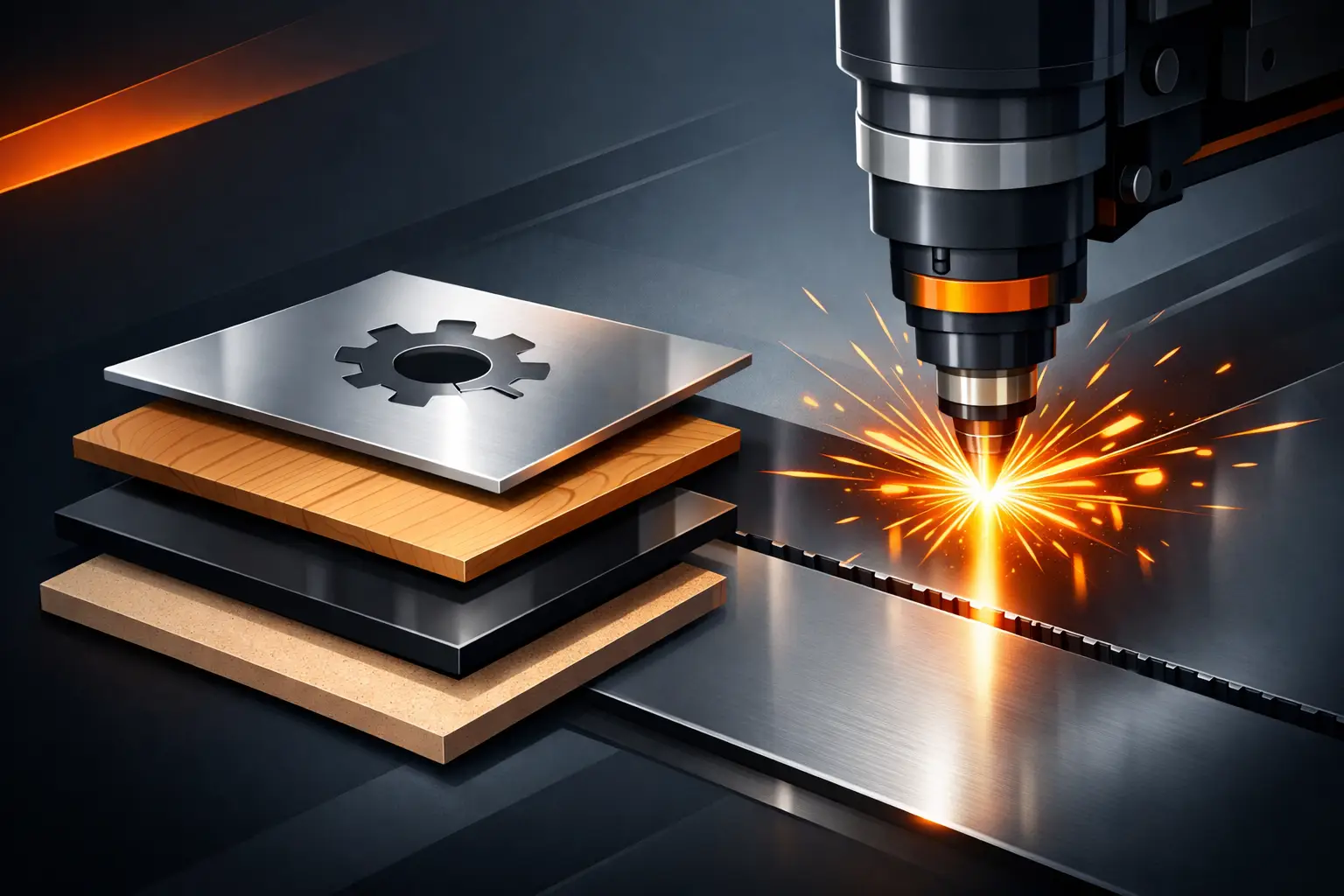
If you are comparing cutting systems for production work, the real question behind what materials can fiber laser cut is usually simpler – will it handle the jobs you quote every day without slowing the shop down? That is where fiber laser technology stands out. It is built for fast, precise metal cutting, and it earns its place in fabrication environments where repeatability, edge quality, and throughput matter.
A fiber laser is not a general-purpose machine for every sheet material in the workshop. It is a metal-focused system, and that distinction matters. Buyers sometimes assume a laser is a laser, but fiber and CO2 machines are designed for different material groups. If your workload is mostly steel, stainless, aluminum, brass, or copper, a fiber laser is usually the right conversation. If you need to process timber, acrylic, MDF, or signage materials, you are looking at a different machine category.
What materials can fiber laser process well?
The short answer is metals, especially sheet and plate used in fabrication, manufacturing, signage, enclosure work, and general production. Fiber laser systems are highly effective on mild steel, stainless steel, aluminum, galvanized steel, brass, and copper. Performance depends on machine power, assist gas setup, material grade, and thickness, but these are the core materials that make fiber lasers commercially valuable.
Mild steel is often the most common application. It cuts cleanly, supports high production speeds, and is widely used across brackets, frames, panels, base plates, and general fabricated parts. For workshops processing carbon steel daily, fiber laser cutting offers a strong mix of speed and consistent edge quality.
Stainless steel is another major category. It is common in food equipment, architectural parts, balustrade components, commercial fit-outs, and industrial fabrication. Fiber lasers handle stainless with excellent precision, especially where part detail and a cleaner edge matter. Thin and mid-range stainless can be processed very efficiently, although finish expectations and gas choice still affect the final result.
Aluminum is also well suited to fiber laser cutting. That includes parts for transport, marine work, signage, and general light manufacturing. Aluminum can be more reflective and thermally sensitive than steel, so machine design, beam stability, and setup quality matter. A properly specified fiber laser makes aluminum production far more practical than many shops expect.
Brass and copper are often where buyers start to see the real advantage of modern fiber technology. These materials are reflective, and older laser systems could struggle with them. Fiber lasers are much better suited to cutting these conductive metals, which makes them useful for electrical parts, decorative panels, busbars, and specialist fabrication jobs.
What materials can fiber laser not handle well?
This is where machine selection saves a lot of frustration. A fiber laser is not the right choice for most non-metal materials. Wood, MDF, plywood, acrylic, plastics, foam, fabric, leather, paper, and glass are not the core application range for this technology. Some of these materials are better suited to CO2 lasers, while others are better handled by CNC routers, knife systems, or other processing methods.
That matters because many production businesses work across both metal and non-metal jobs. A cabinet shop adding laser capability, for example, may assume one machine can cover decorative acrylic one day and sheet steel the next. In practice, that usually means choosing the wrong platform for half the work. Matching the machine to the material is what protects productivity and part quality.
Thickness matters as much as material type
When people ask what materials can fiber laser cut, they often mean what thicknesses can it cut profitably. A machine may be technically capable of cutting a given metal, but commercial performance is a different question. Edge quality, speed, pierce time, taper, heat input, and consumable efficiency all affect whether that material is worth processing on a particular machine.
Thin sheet is where fiber lasers are especially strong. This is why they are widely used for production environments that need speed on light-gauge steel, stainless, and aluminum. As thickness increases, cutting speed drops, gas demand changes, and the machine specification becomes more important. Higher-powered systems expand the practical range, but not every shop needs maximum thickness capacity.
For many businesses, the smarter buying decision is not choosing the machine with the highest advertised cut thickness. It is choosing the one that matches your everyday workload. If 80 percent of your jobs are thin to medium sheet, a machine optimized for that range will often deliver better production value than a larger system bought for occasional heavy plate work.
Surface finish, coating, and grade can change the result
Not all metal sheets behave the same way. Material grade, flatness, coating, and surface condition all influence cut consistency. A fiber laser can cut galvanized steel, for example, but coated materials may behave differently from plain sheet depending on thickness, finish, and process settings.
The same applies to aluminum and stainless. Two sheets listed under the same broad material family can still produce different results if the alloy or surface condition changes. Shops quoting customer-supplied material should keep that in mind. The machine may be capable, but production reliability depends on more than the label on the sheet rack.
This is one reason experienced buyers look beyond headline specifications. A good machine is not just about raw power. It is about stable motion control, clean electrical engineering, dependable beam delivery, and support when processing conditions need adjustment. In a commercial workshop, consistency beats marketing numbers every time.
Why fiber laser is so effective on production metals
Fiber laser systems are built for precision and speed. They concentrate energy efficiently, which helps produce narrow kerf widths, detailed part geometry, and fast cut times on many common metals. For shops running nested sheet parts, repeated production batches, or custom fabricated components, that translates into less secondary work and better part-to-part consistency.
There is also a practical workflow advantage. Fiber laser cutting fits well into modern fabrication lines where fast quoting, quick material changeover, and repeatable output are essential. If your operation is supplying builders, manufacturers, cabinetmakers, or industrial clients, lead times matter. A machine that cuts accurately and keeps up with demand is not just a workshop asset – it is a scheduling advantage.
That said, the best results come from matching the laser source, table size, power level, and extraction setup to the work you actually do. A small shop cutting light-gauge stainless parts has very different requirements from a heavy fabrication business processing larger steel sheets all day.
Choosing a machine based on the materials you actually cut
A better buying approach starts with your job mix. Look at the metals you process most often, the thickness range, the part sizes, and the finish your customers expect. Then consider how often you cut reflective metals like brass or copper, whether you need enclosed operation, and how important automation is to your output targets.
This is where supplier support matters. Machine selection should not stop at a brochure. Workshops need practical guidance on whether a system is designed for their production load, not just whether it can cut a sample piece at a trade show. The right supplier will ask about throughput, shift pattern, material handling, extraction, software workflow, and service expectations.
For businesses moving from outsourcing to in-house cutting, this step is even more important. The question is not only what materials can fiber laser cut. It is whether the machine can cut your materials reliably, at the volumes you need, with support available when uptime is on the line.
Where fiber laser fits best
Fiber laser technology is best suited to fabrication shops, manufacturers, sign makers working with metal, enclosure builders, and industrial businesses that need accurate sheet metal processing. If your workload is built around steel, stainless, aluminum, brass, or copper, it is one of the strongest production tools available.
If your work is centered on timber sheets, plastics, or mixed sign-making substrates, it may not be the right first purchase. That is not a limitation so much as a reminder that good equipment decisions are application decisions. The strongest workshops are not built around generic machines. They are built around machines chosen for the work they need to win.
The most useful next step is to look at your last three months of jobs and be honest about the materials that actually keep your shop busy. That is usually where the right machine choice becomes clear.