
Estimated reading time: 7 minutes
A shop that loses five minutes on every tool change does not notice the problem on one sheet, one panel, or one sign. It notices it at the end of the week, when jobs stack up, operators get pulled off other work, and delivery dates start to tighten. That is exactly where an automatic tool changer CNC machine starts to make real financial sense.
For production workshops, ATC capability is not a luxury feature added for marketing. It is a practical upgrade that reduces manual intervention, keeps workflows moving, and improves consistency across repeat jobs. If you are cutting nested cabinetry, machining composite panels, producing signage, or running mixed-part batches, the ability to swap tools automatically can change both your output and your labor efficiency.
What an automatic tool changer CNC machine actually does
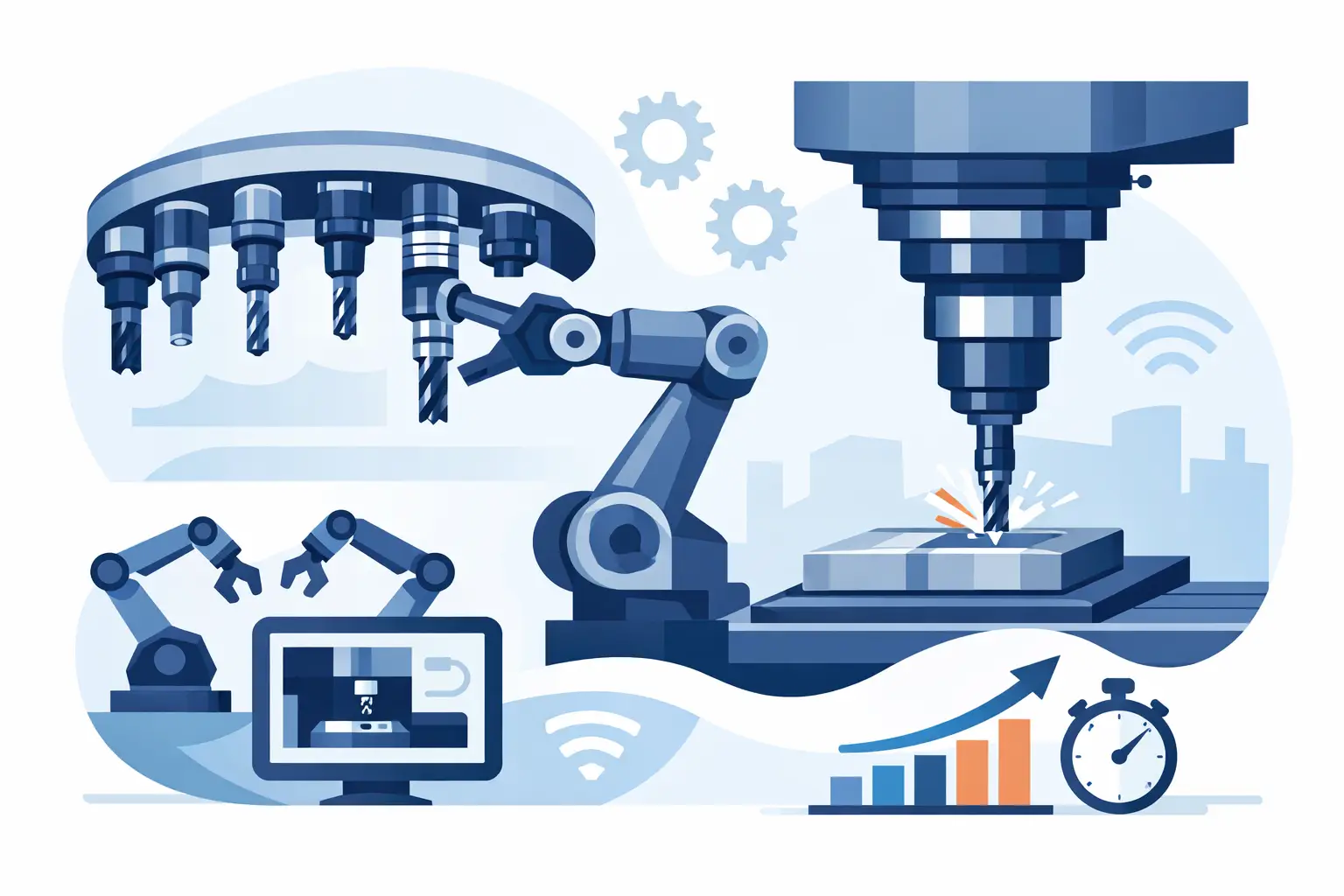
An automatic tool changer CNC machine is built to switch cutting tools during a job without requiring the operator to stop the program and change bits by hand. Instead of pausing production to replace a tool for drilling, pocketing, profiling, or finishing, the machine calls the required tool from its tool rack or carousel and continues the cycle.
That sounds simple, but the impact is substantial. One program can move from roughing to drilling to finishing in one run, with less opportunity for operator error and much less idle time. In a workshop environment, that means smoother scheduling and better use of both machine hours and labor.</p>
The real value shows up when jobs require multiple operations. Cabinet components often need drilling, grooving, and profile cutting. Sign work may move between engraving and edge finishing. Aluminum an
d composite work can demand different tooling for different passes. If the machine can manage those changes automatically, the operator can focus on loading, unloading, inspection, and the next job instead of standing at the spindle.</p>
Why ATC matters in real production
Manual tool changes are manageable in low-volume work or simple one-tool operations. They become a bottleneck when part complexity increas
es or daily output matters. Every stop introduces lost time, and every manual reset creates another chance for mistakes in tool length, collet setup, or sequence order.
An automatic tool changer CNC machine helps control those variables. It supports repeatability because the machine follows a programmed process the same way each cycle. It supports throughput because jobs run with fewer interruptions. It also improves quoting confidence, because cycle times are more predictable when tool changes are built into the process rather than handled manually.
For many shops, the biggest gain is not raw spindle time alone. It is workflow stability. When one operator can supervise production more efficiently, when rework is reduced, and when complex jobs stop tying up labor, the machine starts paying back in several ways at once.
Where an automatic tool changer CNC machine delivers the most value
<p><p>ATC systems are especially useful in commercial environments where parts repeat, materials vary, or programs involve more than one cutter. Cabinetmakers are a strong example because nested-based manufacturing rarely stays limited to a single bit. Drilling patterns, dadoes, cutouts, and final edge passes often belong in the same cycle.
Sign makers also benefit because they frequently combine engraving, V-carving, profile cutting, and finishing operations on the same sheet. Fabricators working with aluminum composite panels or other engineered materials may need multiple tooling stages to maintain clean edges and efficient removal rates.
Shops producing custom work can still see strong value, even if every job is different. If your custom work consistently involves several machining steps, ATC reduces setup drag and lets you move from file to finished part with less interruption. The key question is not whether your work is custom or repetitive. It is how often you need more than one tool to do it properly.
The machine build matters as much as the ATC feature
Not every ATC machine is equal. Buyers sometimes focus on tool count and overlook the rest of the platform. That is a mistake, because tool changing only adds value when the machine frame, spindle, drive system, and electrical design can hold accuracy under production loads.
A rigid chassis matters because tool changes do not fix vibration or poor cut quality. Motion quality matters because repeatability depends on more than the spind
le. Electrical engineering matters because sensors, tool measurement, spindle control, and communication all need to work reliably over long production days.
This is where workshop-first machine design matters. An ATC router should be engineered a
s a production machine from the start, not a light machine with a premium feature added to it. Strong vacuum hold-down, stable gantry construction, quality linear motion components, and clean cable management all contribute to whether the ATC system performs consistently over time.</p>
How to know if your shop is ready for ATC
The right time to move into ATC is usually earlier than many buyers think, but not every workshop needs it im
mediately. If you mainly run simple profile cuts with one tool and short daily machine hours, manual change procedures may still be acceptable. The added investment in ATC may not produce the fastest return in that scenario.
On the other hand, if your operators are pausing jobs several times per sheet, if quoting becomes difficult because cycle times vary, or if labor is being wasted on repetitive interventions, the case becomes much stronger. Shops often reach a point where the machine is capable, but the process is not efficient. That is where ATC closes the gap.
A good test is to review your typical jobs over a month. Count how many require two or more tools. Look at how long operators spend changing tools, resetting, checking offsets, and restarting cycles. Then compare that time against your throughput goals. The numbers usually make the decision clearer than theory does.
<h2>What to ask before you buy
If you are evaluating an automatic tool changer CNC machine, ask practical questions tied to daily operation, not just specification sheets. Start with tool capacity, but do not stop there. You also need to know how tool calibration is handled, how accessible the tool rack is for maintenance, and how the machine behaves if a tool change fault occurs during production.
Ask about spindle quality, controller reliability, and support after installation. Ask whether the machine is suited to your actual material mix, part sizes, and run volume. A 1325 ATC router may suit one cabinet workshop perfectly, while a larger-format machine is the better choice for bigger sheet work or panel processing demands.
Support is a major part of the buying decision. Even experienced operators need responsive backup when dialing in new tooling, troubleshooting alarms, or adjusting workflow after installation. A supplier that understands the production environment is far more valuable than one that simply ships the machine and disappears. That is one reason many workshops look for manufacturers such as MadBytes that build around durability, customization, and direct technical support.
Trade-offs buyers sh</h2>
ould understand
ATC is a strong upgrade, but it is still an investment. The machine will usually cost more than a manual tool change model, and it may require more attention to tool management, operator training, and routine maintenance. Those are not reasons to avoid it. They are simply part of owning more capable equipment.</p>
<p>You also need to match the ATC system to your workload. Too few tool positions can limit efficiency if your jobs use a wide range of cutters. Too much machine for too little production can delay return on investment. The right setup is the one that fits your work today while leaving room to grow without overspending on features you will not use.
That balance is why customization matters. The best machine choice is rarely just the biggest spindle or the highest tool count. It is the machine that matches your workflo
w, materials, cut quality expectations, and production targets with the least friction.
Why ATC often becomes non-negotiable
Once a shop integrates ATC into daily work, it is difficult to go back. Operators get used to running fuller programs, scheduling improves, and jobs move with less stop-start waste. More importantly, the workshop gains a process that is easier to scale.
Growth in manufacturing does not always come from adding people. Often it comes from removing bottlenecks, tightening repeatability, and getting more out of each machine hour. An automatic tool changer CNC machine supports exactly that kind of growth when it is built well, installed properly, and backed by support that understands real production demands.
If your machine is meant to earn its keep every day, the better question is not whether ATC sounds impressive. It is whether your workflow can still afford to operate without it.