
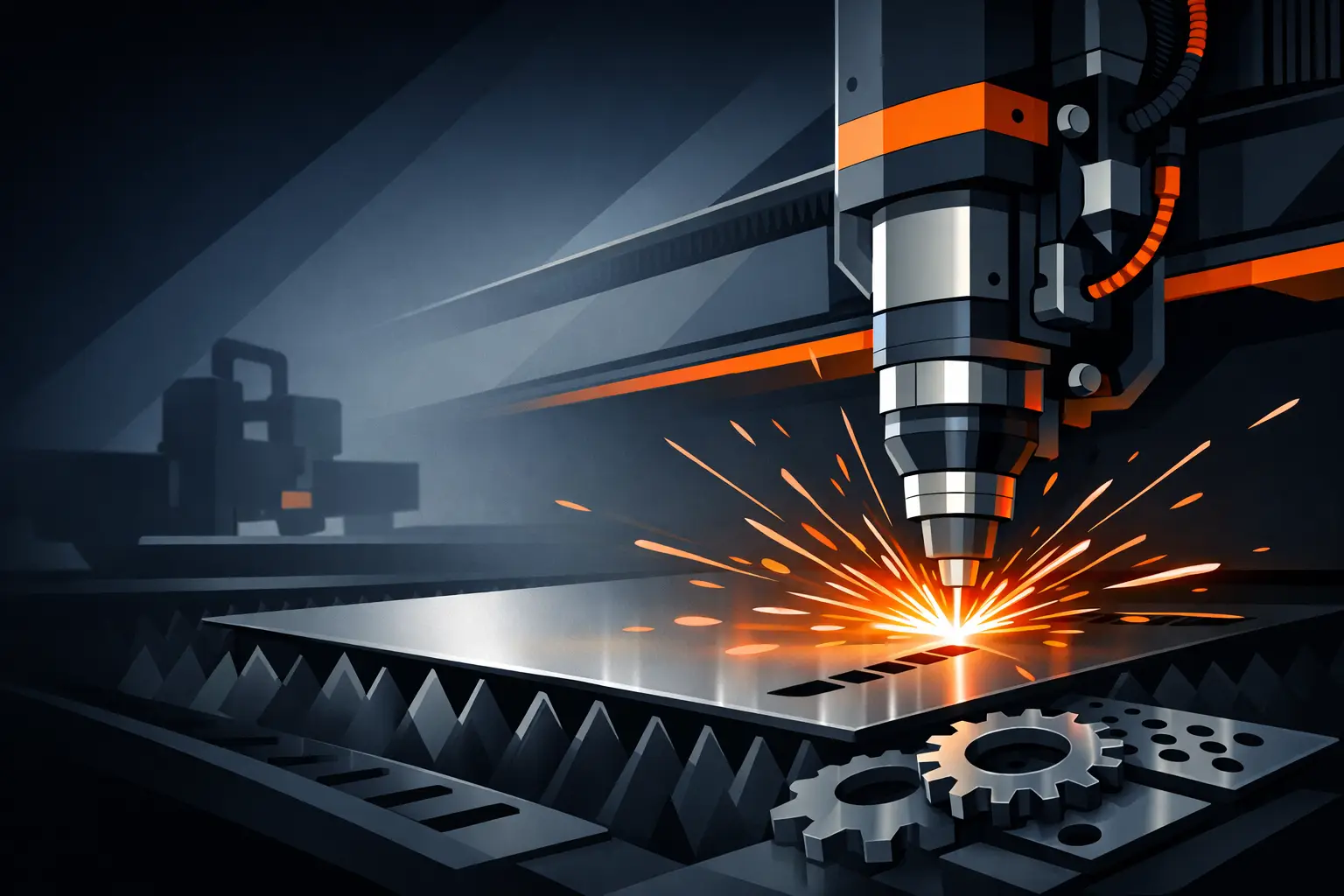
A metalworking fiber laser system earns its keep fast when quoting pressure is high, material costs are rising, and rework is eating into margin. In a production shop, the difference between a machine that looks good on paper and one that performs day after day comes down to cut quality, uptime, and how well the system fits your actual workload.
That is where many buying decisions go off track. Shops compare wattage first, then stop there. Power matters, but it is only one part of the picture. If the frame lacks rigidity, motion control is inconsistent, the electrical layout is messy, or support is hard to reach when a fault appears, the machine can become a bottleneck instead of a production asset.
What a metalworking fiber laser system should do well
A serious fiber laser for metalwork should cut cleanly, repeat accurately, and stay stable under continuous use. Those sound like basic expectations, but they rely on engineering choices that are not always obvious in a quote sheet.
The machine structure is a good place to start. A rigid frame helps maintain alignment and repeatability across long production runs. It also reduces vibration that can affect edge finish, piercing consistency, and fine-detail work. Shops cutting thin stainless for signage have different priorities than fabricators processing thicker mild steel components, but both benefit from a stable platform.
The motion system matters just as much. Fast acceleration is useful, yet it only adds value when positioning remains accurate and corners stay sharp. A machine that advertises high speed but struggles with consistency will often lose time through secondary cleanup, rejected parts, and operator intervention.
Then there is the control side. Operators need a system that is straightforward to run, not one that turns ordinary nesting and parameter changes into a slow process. Good control software reduces setup time, shortens training, and makes it easier to switch from one job type to another without disrupting output.
Power selection depends on your workload
The most common mistake with a metalworking fiber laser system is oversimplifying power selection. More wattage can increase cutting capability and productivity, but that does not automatically make it the right fit for every shop.
If your work is dominated by thin-gauge sheet, decorative panels, electrical enclosures, or bracket production, a lower to mid-range power setup may already deliver the speed and finish you need. In that case, spending more on excess power can shift budget away from better extraction, loading support, or a stronger machine platform.
On the other hand, if you regularly process thicker plate or need to maintain throughput across a wider material range, higher power may be justified. It can reduce cut times, improve productivity on demanding jobs, and expand the kind of work your shop can quote with confidence. The trade-off is higher upfront cost and a stronger need for well-matched components throughout the system.
A good supplier will ask what materials you cut most often, what thickness range pays your bills, and whether your growth plan involves new work types. That conversation is more useful than simply pushing the highest wattage available.
Bed size and material handling affect real output
Laser buyers often focus on cut speed while underestimating how much time is lost handling sheets. Bed size needs to match the material format you actually process and the floor space you can realistically dedicate.
For some workshops, a standard-sized bed is the practical choice because it balances footprint, sheet usage, and investment level. For others, larger work areas make sense because they reduce repositioning, support bigger part layouts, and improve nesting efficiency. The best answer depends on your product mix, order volume, and available labor.
Material handling is where production gains often become obvious. A machine can cut quickly, but if loading and unloading slow every cycle, the speed advantage starts to disappear. Shops with steady throughput should think beyond the laser head and consider the full workflow around the table. Even small improvements in handling can add up over a week of production.
Cut quality is more than edge appearance
When buyers talk about cut quality, they usually mean whether the edge looks clean. That matters, but in a working shop, quality also means repeatability, hole accuracy, minimal taper where applicable, and reduced need for downstream finishing.
If parts go straight to bending, welding, or assembly, consistency matters more than a photo-ready sample. You want dimensions that hold, corners that stay defined, and a process that does not force operators to compensate for machine variation. A cheaper machine that produces occasional defects may still look acceptable during a demo, yet cost far more over time through scrap and lost hours.
This is especially true for businesses serving repeat commercial work. Once a customer expects consistent components every run, variation becomes expensive. A dependable machine protects both output and reputation.
Support is part of the machine purchase
For commercial buyers, after-sales support is not an extra. It is part of the equipment decision. If a laser stops, production stops with it, and every hour matters.
That is why workshop owners should ask direct questions before buying. Who provides installation support? Who helps with setup and training? Who answers technical issues after handover? Is support coming from people who understand production machinery, or from a sales channel that disappears once the invoice is paid?
A metalworking fiber laser system should come with backing that matches its role in the shop. Practical support includes help with commissioning, parameter guidance, troubleshooting, and long-term maintenance planning. The best machinery relationships are built around keeping the customer productive, not just closing the sale.
This is one reason many buyers prefer dealing with an equipment partner that understands workshop conditions and can tailor the machine to the application. MadBytes has built its reputation around that kind of practical support, with a focus on solid machine engineering, customization, and direct technical backup rather than commodity box-moving.
Questions that separate a good option from a risky one
A serious buyer should look past headline specs and ask how the machine behaves under load. Can it hold accuracy during continuous production? Is the electrical engineering clean and organized? Are key components selected for reliability, or simply for price? Does the machine configuration suit your work, or are you adapting your workflow to fit a generic build?
It also helps to think about operator experience. If your team includes newer CNC users, usability becomes even more important. A machine that is easy to learn and stable to run can reduce mistakes and build confidence faster. For experienced operators, efficient controls and predictable performance mean less interruption and tighter scheduling.
There is also a growth question. Some shops buy only for current demand and end up replacing too soon. Others overbuy and tie up capital in capacity they do not use. The right decision usually sits in the middle – enough machine to support expansion, but grounded in real production needs.
The best system is the one that fits your shop
There is no single best metalworking fiber laser system for every fabricator, sign maker, or manufacturer. The right machine depends on what you cut, how often you run, who operates it, how much floor space you have, and what happens when service is needed.
For thin-sheet, high-detail work, speed and control refinement may matter most. For heavier fabrication, power, frame stability, and sustained performance become more critical. For growing shops, customization and support can be the deciding factor because the machine needs to fit both current demand and the next stage of production.
A good purchase decision comes from looking at the full production picture: machine structure, motion accuracy, software usability, material flow, support quality, and suitability for your workload. When those pieces line up, the laser stops being just another line item and starts becoming a reliable part of how your shop wins work.
If you are comparing systems, the smartest move is to judge them by the jobs you need to run next month, next year, and under full production pressure – because that is where the right machine proves its value.