
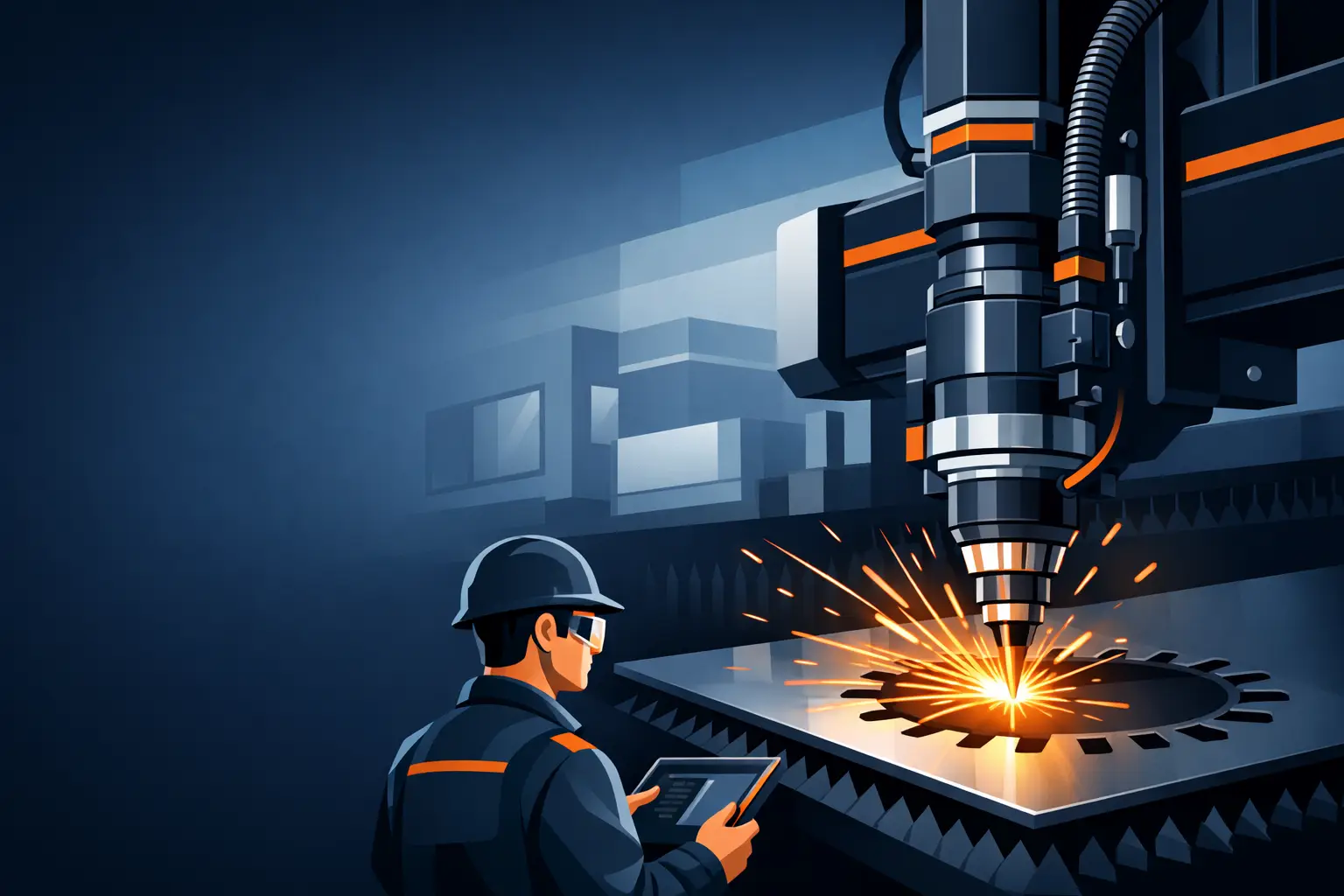
A fiber laser that is set up well will cut fast, hold tolerance, and keep production moving. A fiber laser that is poorly set up will waste sheet, create rework, and slow the whole shop down. If you are learning how to operate fiber laser cutting machine equipment in a real production environment, the goal is not just to make a cut. The goal is to get repeatable parts, stable throughput, and fewer interruptions.
That is where operators make the biggest difference. The machine does the cutting, but the operator controls the conditions that decide whether the result is clean and consistent or expensive and frustrating.
How to operate fiber laser cutting machine systems in real production
Operating a fiber laser starts well before the first pierce. Material type, sheet condition, nozzle condition, assist gas quality, program settings, and machine calibration all affect the final result. Shops that get strong output from their laser are usually disciplined in the setup stage.
Before running a job, confirm the machine is clean, powered correctly, and ready for production. The cutting bed should be clear of offcuts and debris. The lens and nozzle should be in good condition. Gas supply should be stable, and the material should match the program. Even a small mismatch between programmed thickness and actual sheet can show up quickly in cut quality.
Machine warm-up and daily inspection matter more than many new operators expect. Motion systems, extraction, chiller performance, and gas pressure all influence consistency. If any one of those is unstable, the cut may still start, but edge quality and speed usually suffer.
Start with the job file, not the control panel
A common mistake is jumping straight into machine operation without reviewing the job itself. Check the drawing, nest, material specification, thickness, lead-ins, pierce locations, and cut sequence first. If the file is wrong, perfect machine setup will not save the job.
For commercial work, it also helps to review whether the nest is practical for unloading and whether small parts are likely to tip or collide. Good operation is not only about beam control. It is about keeping the full workflow efficient from loading to finished parts.
Confirm the material and sheet condition
Fiber lasers are efficient, but they are not immune to poor material condition. Rust, scale, oil, protective film, warping, or inconsistent coating can affect the cut. Some materials process cleanly with high speed settings, while others need more conservative parameters to maintain edge quality.
Flat, properly supported sheet gives the best result. If the material is bowed or unstable on the bed, cut height can vary across the sheet. That usually leads to inconsistent kerf, dross, or missed cuts. Shops that process mixed material batches learn quickly that sheet quality can change the machine’s behavior even with the same program.
Setup steps that affect cut quality most
If someone asks how to operate fiber laser cutting machine equipment well, the short answer is this: control the variables you can control every single time. In practice, a few setup points have the biggest impact.
The first is nozzle condition and centering. A damaged nozzle or misaligned beam path can produce uneven edges and unstable piercing. The second is focus position. Different materials and thicknesses respond better to different focal positions, and there is no single setting that works for every job. The third is assist gas choice and pressure. Nitrogen, oxygen, and compressed air each behave differently depending on the material and finish requirement.
Feed rate and pierce settings also need to match the job. Running too aggressively may look productive on the screen, but if it adds dross or causes failed pierces, overall throughput drops. On the other hand, excessively conservative settings protect the cut but waste machine capacity. Good operators learn where the practical production window sits.
Gas selection changes the finish
Assist gas is not a minor setting. It directly changes cut behavior and surface finish. Nitrogen is commonly used where oxidation-free edges are preferred, especially on stainless and other jobs where a cleaner finish matters. Oxygen can support cutting in certain materials but may leave a different edge condition. Compressed air can be cost-effective for some work, but it depends on material and finish expectations.
The trade-off is usually between speed, operating cost, and edge appearance. There is no universal best choice. The right gas depends on what the customer expects from the finished part and how much secondary processing the shop wants to avoid.
Watch the first cuts closely
Even when the setup looks correct, the first parts tell the truth. Watch the pierce, edge quality, spark direction, and whether small internal features clear properly. A stable cut usually sounds and looks consistent. If piercing is violent, edges are rough, or dross starts building, stop early and adjust before the problem spreads across a full sheet.
This is where experienced operators save time. They do not wait until the sheet is complete to inspect the output. They read the cut in real time and make decisions early.
Operating habits that improve uptime
A fiber laser should not be treated as a black box. Strong daily operation comes from routine. Keep the bed clean, inspect consumables, verify gas supply, check chiller status, and review alarms rather than repeatedly clearing them without diagnosis. Small issues become expensive downtime when they are ignored.
Consistent operators also keep records. If a certain material batch needed a different focus position or gas pressure, that information helps the next run. Over time, this builds a more reliable process and reduces trial and error on repeat work.
For shops running mixed workloads, standardizing operator checks is one of the fastest ways to improve output. That matters whether the machine is cutting thin stainless for signs, processing mild steel components, or handling production fabrication parts all day.
Common issues during operation
Most cut problems come back to a few categories: wrong parameters, poor material condition, consumable wear, gas instability, or mechanical inaccuracy. The challenge is that symptoms can overlap. Dross may point to speed, focus, or gas pressure. Rough edges may suggest nozzle wear, contamination, or sheet inconsistency.
That is why random adjustment is rarely the best response. Change one variable at a time and watch the result. A disciplined troubleshooting approach is faster than chasing the problem with multiple guesses.
If the machine regularly produces inconsistent results across the bed, it may be time to look beyond settings alone. Height control behavior, drive accuracy, calibration, and service condition all matter. This is also why support from an experienced machinery supplier matters in production shops. Good technical backup shortens the path between a problem and a reliable fix.
Operator skill still matters on advanced machines
Modern controls, nesting software, and automatic height sensing make fiber lasers easier to run than older systems, but they do not remove the need for operator judgment. Automation helps repeatability. It does not replace understanding.
A capable operator knows when to trust the standard parameter library and when a job needs adjustment. Thick material, reflective surfaces, tight internal features, and demanding edge requirements often call for closer attention. The machine can only perform as well as the setup allows.
For growing fabrication businesses, this is one of the biggest reasons to choose equipment with good engineering and real support behind it. A rigid machine frame, accurate motion system, stable electrical design, and responsive service team make operation more predictable. That predictability becomes revenue because it reduces scrap, protects schedules, and keeps labor focused on output instead of constant correction.
Training new staff without slowing the shop
Training a new operator should focus on process awareness, not just button pressing. Start with material identification, basic machine checks, consumables, gas selection, and cut quality recognition. Once those fundamentals are clear, software and parameter changes become easier to understand.
It also helps to train around actual jobs instead of isolated test coupons only. Production work teaches the real constraints of loading, nesting, part stability, and throughput. New operators learn faster when they can connect settings to real outcomes on real customer parts.
A well-supported machine makes that training easier. Shops working with suppliers that provide installation help, practical setup guidance, and ongoing technical support generally reach stable production faster. That is especially valuable for businesses adding laser capacity for the first time.
Knowing how to operate fiber laser cutting machine equipment well is really about building a controlled process. The more consistent the setup, the more consistent the parts. When operators understand material behavior, machine condition, and parameter logic, the laser becomes more than a fast cutter. It becomes a dependable production asset that earns its floor space every day.
If you are investing in fiber laser capacity, choose a machine and support team that make good operation easier from day one. That pays off long after installation, when the real test is not whether the laser can cut, but whether it can keep cutting accurately under production load.