
If your router spends too much time waiting on manual tool changes, your spindle is not the real bottleneck – your workflow is. That is usually the point where buyers start asking, what is ATC CNC router technology, and whether it is worth the extra investment for daily production.
An ATC CNC router is a CNC router fitted with an automatic tool changer. Instead of stopping the job so the operator can remove one bit and install another by hand, the machine changes tools on its own according to the programmed cutting sequence. That means one job can move from drilling to grooving to profile cutting to finishing without repeated manual intervention.
For busy cabinet shops, sign makers, joinery businesses, and production workshops, that difference is not minor. It changes how quickly jobs move, how consistently parts are produced, and how much dependence there is on an operator standing at the machine for every setup change.
What is ATC CNC router technology?
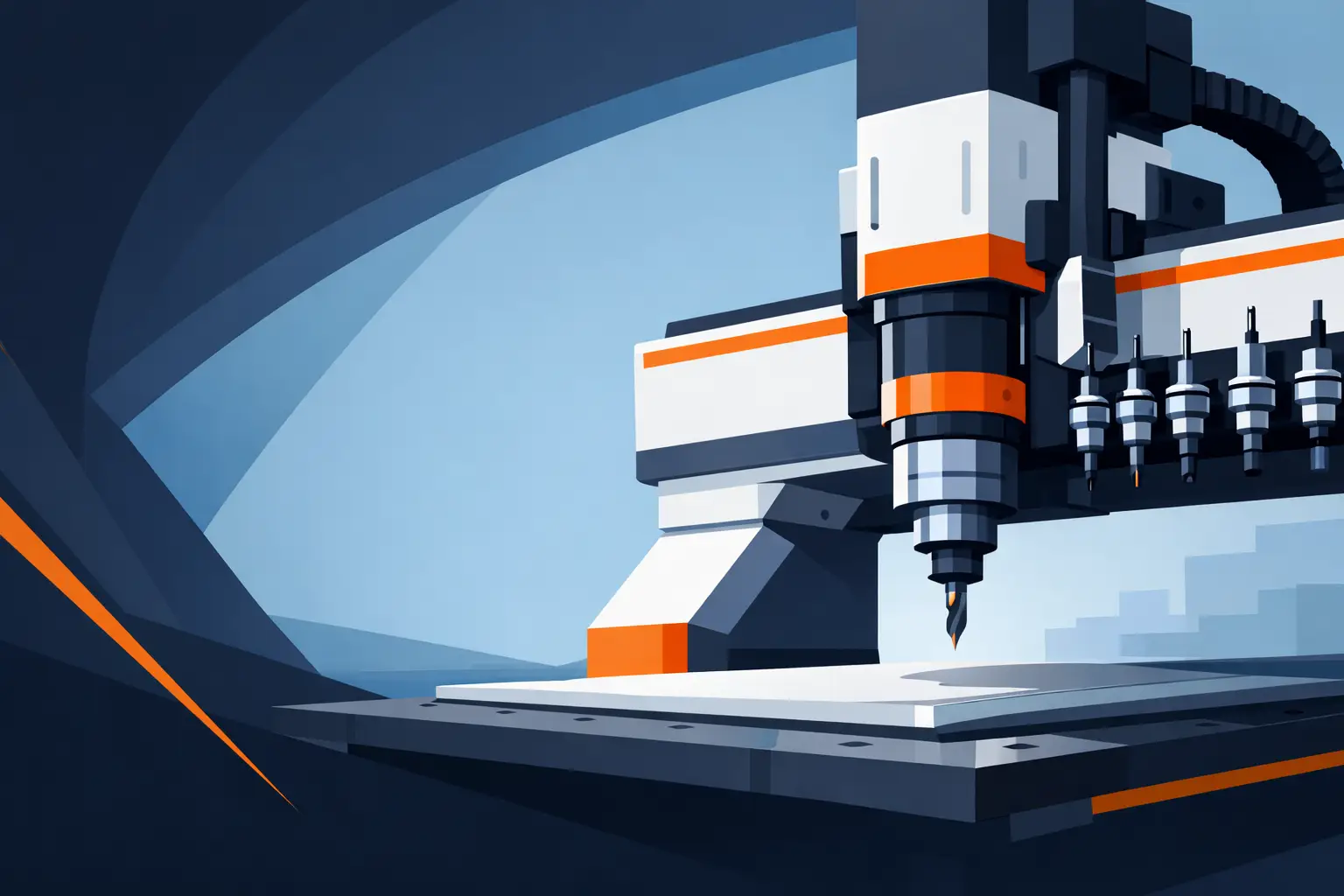
At its core, ATC CNC router technology combines three main elements: the router itself, a spindle designed for automatic tool release, and a tool storage system that holds multiple cutters ready for use. The control system calls up the required tool, the spindle returns the current tool if needed, and the next one is loaded automatically.
The tool storage system is usually either a linear tool rack or a carousel-style changer. A linear rack is straightforward and common on many production routers. A carousel can offer compact tool storage and fast access depending on machine design. Neither is automatically better in every case. The right option depends on available space, tool count, machine layout, and the kind of work you run every day.
This is why the answer to what is ATC CNC router capability is not just “a router that changes tools.” It is really a production feature designed to reduce idle time, improve repeatability, and make multi-operation jobs more efficient.
How an ATC CNC router works in practice
In a standard manual-tool machine, a nested cabinet sheet may require the operator to stop the program, fit a drill bit, restart the job, stop again for a compression bit, then stop once more for engraving or finishing. Every pause adds handling time and increases the chance of setup inconsistency.
An ATC machine handles those transitions within the program. The operator loads the sheet, confirms the tooling and program, and the machine progresses through each operation in order. Drilling, pocketing, cutting, and finishing can all happen in a single automated cycle if the tooling is set up correctly.
That matters most when jobs involve multiple toolpaths. Cabinet components, routed doors, signs with text and profile cutting, furniture parts, and production panels are all common examples. If your work regularly requires more than one cutter, an ATC router starts to show its value quickly.
Where ATC makes the biggest difference
The biggest gains usually come from production environments, not occasional hobby use. A shop cutting one simple profile per day may not recover much value from automatic tool changing. A shop processing multiple sheets, varying materials, or mixed operations every shift is in a different position.
Cabinetmakers are a strong example. A single job can involve drilling hardware holes, cutting dados, machining pockets, and profile cutting finished components. On a manual machine, each tool change adds interruption. On an ATC router, those operations run as part of one organized process.
Sign makers also benefit when work includes engraving, V-carving, profile cutting, and finishing passes. The same applies to general fabrication shops producing repeat parts in wood, plastic, ACM, or other sheet materials where cycle time affects delivery schedules.
The real advantage is not only speed. It is process control. When the machine changes tools the same way every time, production becomes more predictable.
Manual tool change vs ATC CNC router
A manual-tool router still has a place. It usually carries a lower upfront cost, a simpler machine layout, and can be a sensible choice for lower-volume workshops or jobs that rely on one main cutter. For some buyers, especially those entering CNC for the first time, that simpler starting point makes sense.
But there is a trade-off. Manual machines rely more heavily on operator attention, and every stop in the program creates dead time. As job complexity rises, the manual process becomes harder to justify.
An ATC CNC router costs more because the machine includes additional hardware, control integration, and spindle capability. In return, it reduces labor tied to tool changes, shortens cycle interruptions, and supports more efficient production scheduling. For commercial shops, the question is usually not whether ATC is better in theory. It is whether your current workload is already large enough to benefit from it.
What to look for in an ATC router
Not all ATC routers deliver the same result. Buyers should look beyond the phrase “automatic tool changer” and pay attention to the machine structure around it.
Frame rigidity matters because tool changing alone does not improve cut quality. If the machine lacks a stable chassis, accurate motion system, and clean spindle performance, the time savings will not compensate for poor part consistency. A proper production router needs a rigid frame, dependable drive system, and electrical design that stands up under daily use.
Tool capacity matters too. Some shops only need a small set of standard cutters loaded all day. Others benefit from a larger tool count because they switch between drilling, compression cutting, engraving, surfacing, and specialty profiles. Buying too little capacity can limit future efficiency, while buying more than you will use may not be necessary.
Software compatibility and control setup also deserve attention. An ATC machine is only efficient if the post-processor, tool numbering, and programming workflow are reliable. The best machine on paper can become frustrating if setup support is weak or training is an afterthought.
That is why after-sales support matters so much in this category. Installation guidance, tool setup help, troubleshooting, and long-term technical backup all affect how quickly the machine becomes productive on your floor.
Is an ATC CNC router worth it?
It depends on your workload, staffing, and production goals.
If you are running repeated parts, nested sheets, or multi-step jobs every day, an ATC router often makes strong operational sense. It reduces non-cutting time, lowers operator interruption, and helps standardize output. For shops where machine time directly affects quoting, scheduling, and delivery performance, that has clear value.
If your jobs are short, varied, and mostly single-tool operations, the return may be slower. In that case, a well-built manual-tool machine can still be the better fit. The right answer is not about buying the most features. It is about matching the machine to the actual production pattern.
A lot of buyers first ask what is ATC CNC router equipment, but the better question is this: how many hours are you losing each week to stopping, changing, checking, and restarting? Once that time is measured honestly, the decision becomes easier.
Who should consider upgrading to ATC?
Shops usually reach the upgrade point when one of three things happens. They are producing enough volume that manual changes are slowing delivery. They are taking on more complex jobs with several tools per sheet or part. Or they want to reduce dependence on a single highly experienced operator managing every setup detail.
ATC is also worth considering for businesses planning growth. If you expect to move from occasional CNC work into full production routing, buying for the next stage can be smarter than replacing an underspecified machine too soon.
For workshops comparing machine options, this is where a manufacturer with real engineering and support experience adds value. A properly configured ATC router is not just a catalog feature. It should be matched to your materials, part sizes, tooling, and output targets.
The practical value of ATC in a production shop
The strongest case for ATC is simple: more cutting time, less interruption. That does not mean every shop needs it on day one, and it does not erase the need for good programming, tooling, and maintenance. But in the right environment, it makes production more efficient and more repeatable.
For serious woodworking, sign production, and fabrication work, an ATC CNC router is less about convenience and more about keeping the machine productive through the full job cycle. If your workload already demands multiple tools, tighter scheduling, and consistent output, ATC stops being an upgrade for later and starts looking like the right machine for the work you are doing now.