
If you are comparing metal cutting equipment for a busy shop, the real question behind what is fiber laser cutting is usually simpler – how does it help you cut faster, cleaner, and with less rework? That is where fiber laser technology stands out. It is built for production environments that need precision, repeatability, and output that holds up under real workloads.
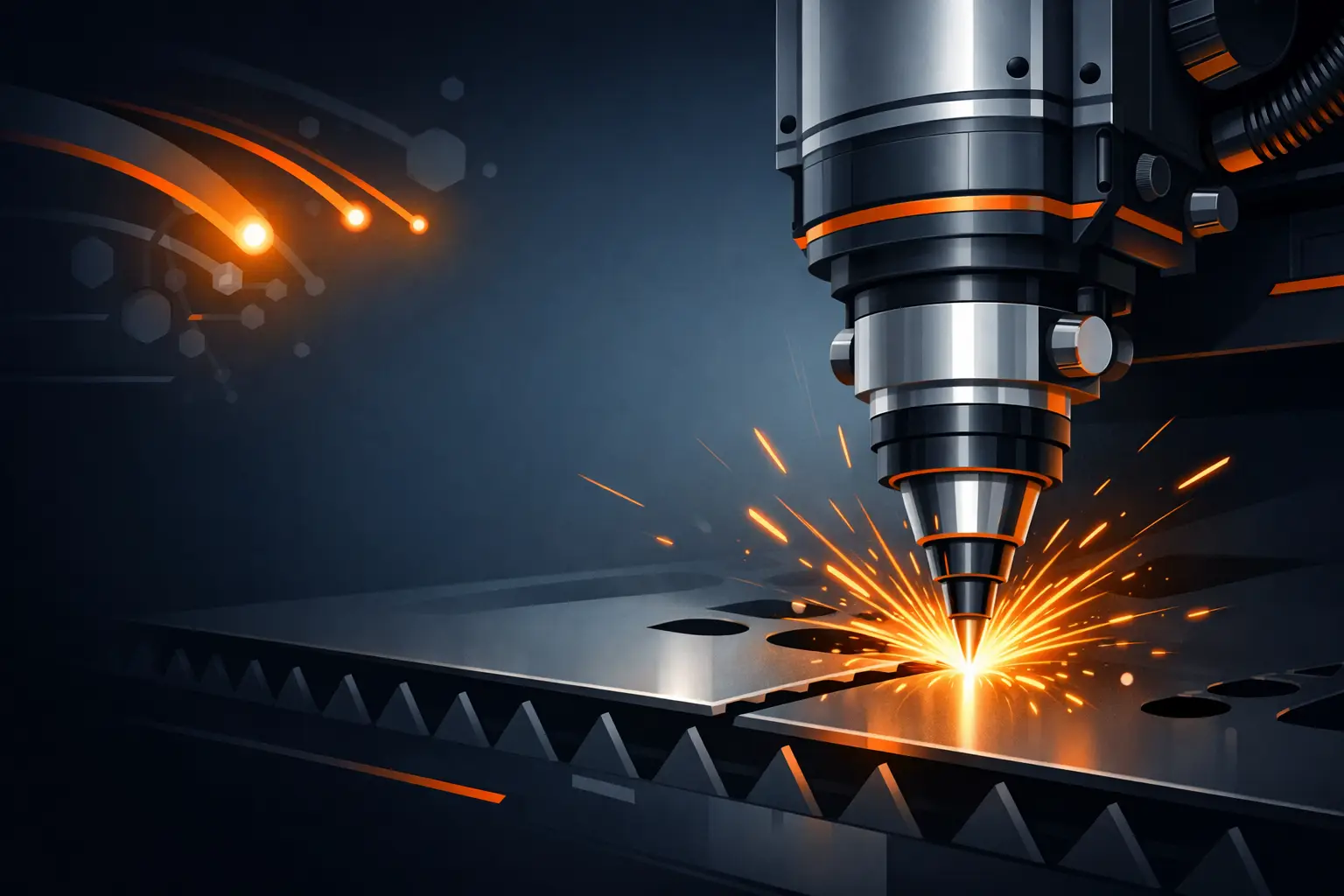
Fiber laser cutting is a process that uses a high-intensity laser beam, generated through a fiber optic laser source, to cut metal with extreme accuracy. The beam is focused through a cutting head onto the material surface, where it heats, melts, or vaporizes the metal along a programmed path. An assist gas then clears molten material from the cut line, leaving a narrow kerf and a clean edge.
For fabrication shops, sign makers, general manufacturers, and metalworking businesses, that matters because cut quality affects everything that follows. Cleaner parts mean less secondary finishing, better fit-up, and faster movement into welding, bending, or assembly.
What is fiber laser cutting and how does it work?
At the machine level, a fiber laser cutting system combines several core components: the laser source, the beam delivery system, the cutting head, the motion platform, and the control software. Unlike older laser designs that rely on mirrors to direct the beam over long distances, a fiber laser generates the beam in a doped optical fiber and delivers it efficiently to the cutting head.
That design brings practical advantages. Fiber lasers are known for strong electrical efficiency, stable beam quality, and lower maintenance requirements compared with more traditional laser systems. In production, that often translates to more uptime and fewer variables to manage.
The cutting process starts with a CAD drawing or production file. The machine control converts that design into motion paths, lead-ins, pierce points, and cutting sequences. The laser then focuses energy into a very small spot on the sheet, producing enough heat to cut the material while the machine moves the head or table with high precision.
Assist gas plays a major role here. Depending on the material and finish requirements, the machine may use oxygen, nitrogen, or compressed air to improve cut performance. Gas choice affects edge quality, cutting speed, oxidation, and operating cost, so it is not just a technical detail – it directly influences part quality and production economics.
What materials can a fiber laser cut?
Fiber laser cutting is primarily used for metals. Mild steel, stainless steel, aluminum, brass, and copper are among the most common materials. That range is one reason the technology is widely used across fabrication, electrical enclosure manufacturing, signage, machinery production, and custom metalwork.
Material type and thickness make a big difference to machine selection. Thin sheet metal can often be processed at very high speed, which is where fiber lasers really show their value. As thickness increases, the machine still performs well, but the right laser power, drive system, cutting head, and bed design become more important.
Reflective materials like brass and copper, once considered more difficult for some laser systems, are generally better suited to fiber technology when the machine is properly configured. Even so, not every machine handles every material equally well. Beam quality, source quality, and machine stability all affect how consistently those materials can be cut in day-to-day production.
Why shops choose fiber laser cutting
The main reason is productivity. Fiber laser systems are fast, especially on thin to medium-gauge metal, and they produce consistent parts with tight tolerances. When a shop is processing repeated jobs, nested parts, or high part volumes, that speed quickly turns into measurable capacity.
The second reason is edge quality. A good fiber laser can produce smooth, accurate edges that reduce deburring and cleanup. That saves labor, shortens turnaround times, and improves downstream efficiency.
The third reason is flexibility. A single machine can handle a wide variety of parts, hole sizes, contours, and production runs. For shops quoting mixed work, that flexibility matters. It allows operators to move from one job type to another without changing out major tooling.
There is also a maintenance and operating cost angle. Compared with some older cutting technologies, fiber lasers typically have fewer consumable-heavy subsystems and a more efficient power profile. That does not mean they are maintenance-free. It means the ownership model can be more predictable when the machine is properly built and properly supported.
Fiber laser cutting vs other cutting methods
If you are evaluating equipment, the more useful question is not just what is fiber laser cutting, but where it fits against plasma, CO2 laser, and mechanical cutting methods.
Compared with plasma, fiber laser cutting generally offers higher precision, a narrower kerf, and better edge quality, particularly on thinner materials. Plasma can still be a strong option for heavier plate or lower-cost rougher cutting, so the right choice depends on your work mix.
Compared with CO2 lasers, fiber lasers are often more efficient and require less optical maintenance. They also tend to perform very well on reflective metals. CO2 still has a place in some applications, but for many metal fabrication shops, fiber has become the stronger long-term production platform.
Compared with punching or mechanical cutting, fiber lasers offer more geometry freedom. There is no custom tool required for every shape, which makes them well suited to short runs, prototyping, and varied production. The trade-off is that if you are producing very specific high-volume punched forms, dedicated tooling may still make sense in the right setup.
Where machine build quality matters
Not all fiber laser cutters perform the same, even if the power rating looks similar on paper. Shops often focus first on wattage, but real-world results depend just as much on frame rigidity, drive accuracy, motion smoothness, electrical layout, software integration, and service access.
A rigid machine frame helps maintain positional accuracy over long operating hours. A stable motion system supports cleaner corners, more consistent hole cutting, and better repeatability across the sheet. Clean electrical engineering reduces nuisance faults and supports easier troubleshooting when production time matters.
This is where many buyers run into problems with commodity equipment. A machine may look competitive in a quote, but if support is weak, setup is inconsistent, or replacement parts are hard to source, production suffers. For a commercial workshop, downtime is rarely a minor inconvenience. It affects delivery schedules, quoting confidence, and customer relationships.
That is why experienced buyers look beyond headline specs. They want to know who provides installation help, who answers service calls, and whether the supplier understands actual workshop use. MadBytes positions its systems around that practical reality – machine durability, customization, and direct technical support matter just as much as raw cutting capability.
Is fiber laser cutting right for every shop?
Not always. It depends on what you cut, how often you cut it, and what level of finish your customers expect.
If your business mainly processes sheet metal and needs fast, accurate, repeatable parts, a fiber laser is often a strong fit. If your workflow includes custom brackets, panels, enclosures, signs, components, or production batches with changing geometry, the flexibility can be a major advantage.
If, on the other hand, your work is limited to occasional heavy plate or rough-cut applications where edge finish is less critical, another process may be more economical. The machine has to match the work, not the other way around.
That is also why customization matters. Table size, power level, loading approach, extraction setup, and control features all affect whether a machine supports your actual throughput. A small shop running varied work has different priorities from a larger manufacturer feeding multiple downstream processes.
What to consider before buying a fiber laser cutter
The most important buying question is not just how powerful the machine is. It is whether the full package supports reliable production. That includes the machine structure, the source and head quality, the control system, operator usability, servicing, training, and long-term parts support.
You should also consider the materials you cut most often, your maximum thickness, expected daily runtime, and whether you need room to scale. A machine that is underspecified can create bottlenecks quickly. One that is overspecified may tie up budget without improving your actual output.
For many shops, the best buying decision comes from matching machine capability to workflow rather than chasing the biggest specification sheet. Good suppliers help with that process. They ask what you make, how you nest parts, what finish standards you need, and how downtime affects your business.
Fiber laser cutting has become a serious production tool because it solves real workshop problems – speed, accuracy, flexibility, and cleaner finished parts. If your operation depends on consistent metal cutting and dependable output, it is worth looking at the machine as part of your production system, not just as a standalone purchase.